
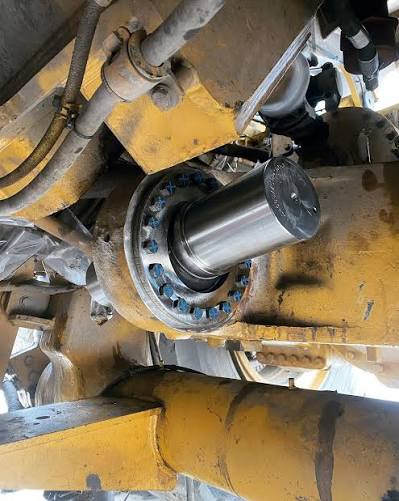
Bearing failure on heavy equipment rarely comes out of nowhere. In a mining fleet, the damage often begins with an overlooked issue: contaminated grease, shock loading, or misalignment. Understanding the main causes of premature bearing failure helps maintenance teams reduce downtime, increase asset availability, and keep mining equipment working in harsh environments.
What causes bearing failure on heavy equipment?
The most common causes of bearing failure on heavy equipment are lubrication problems, contamination, incorrect installation, misalignment, unsuitable bearing selection, and damaging load conditions. In mining applications, these issues are intensified by abrasive dust, moisture, vibration, shock loads, steep grades, heavy payloads, and long operating hours. A bearing may appear to fail suddenly, but the root cause often developed over many shifts before an unplanned downtime.
For maintenance teams, the key is to treat every failed bearing as evidence. A haul truck bearing failure, premature wheel bearing failure, or Excavator pin failure should trigger a root-cause review, not just a part replacement. If the same machine or component keeps failing, the problem may be in the lubrication routine, mounting practice, sealing system, load profile, or component alignment.

Lubrication problems start many failures
Lubrication is one of the first places to look when diagnosing premature bearing failure. Bearings need the right lubricant, in the right amount, at the right interval. Too little lubrication allows metal-to-metal contact, heat buildup, smearing, and accelerated wear. Too much grease can also create problems by increasing heat, churning, and seal stress.
The lubricant must match the bearing type, speed, temperature, load, and environment. A grease that works in a clean plant setting may not survive the shock loads and contamination exposure found in a mobile fleet. Mining equipment also sees washdowns, mud, fine dust, and changing temperatures, all of which can degrade lubricant performance or carry contamination into the bearing.
Watch for these lubrication-related warning signs:
- Discolored grease, which may indicate heat, oxidation, water, or dirt ingress.
- Smearing on rolling elements or raceways, often linked to poor lubricant film or sliding.
- Blue or dark heat marks, which suggest elevated operating temperatures.
- Dry, polished, or scored surfaces, showing that the bearing was not protected by an adequate film.
- Grease pushed past seals, which can point to over-greasing, pressure issues, or seal damage.
Good lubrication management is not just about adding grease. It includes clean storage, dedicated dispensing tools, correct grease compatibility, controlled application amounts, and documented intervals adjusted to the real operating environment.
Contamination turns small particles into major damage
In mining, contamination is a constant threat. Dust, grit, water, and debris can enter through damaged seals, poor handling, pressure washing, or improper assembly. Once inside, abrasive particles can dent raceways, break down lubricant, and accelerate wear.
This is especially important for haul trucks, loaders, excavators, crushers, conveyors, and support vehicles working in wet or dusty conditions. A tiny amount of abrasive material can create surface damage that grows under repeated load. Moisture adds another layer of risk by encouraging corrosion and reducing lubricant effectiveness.
To reduce contamination-related failures, maintenance teams should focus on practical controls:
- Inspect seals during every relevant service event. Replace worn, cracked, hardened, or displaced seals before they allow debris in.
- Keep bearings packaged until installation. Open packaging only in a clean area and only when the component is ready to install.
- Clean surrounding housings and tools first. Installing a clean bearing into a dirty housing defeats the purpose.
- Avoid uncontrolled pressure washing near seals. High-pressure water can force moisture and grit past sealing surfaces.
- Use breathers, covers, and guards where appropriate. Protecting the bearing area often costs far less than repeated repairs.
Contamination prevention is one of the most practical answers to how to extend bearing life in harsh operating conditions.
Installation errors create early damage
A bearing can be damaged before the machine ever returns to service. Incorrect mounting tools, uneven force, hammer strikes, improper heating, and poor shaft preparation can cause premature wear. These defects may be too small to see during installation but large enough to shorten service life dramatically.
Improper fit is another common contributor. If the shaft or housing is worn, out of round, burred, or incorrectly sized, the bearing may not seat properly. Housing deformation can create uneven loading and abnormal wear patterns. Misalignment between the shaft, housing, and connected components can also concentrate stress on a small area of the bearing rather than distributing load as intended.
A better installation process should include:
- Verifying shaft and housing condition before assembly.
- Using the correct pullers, presses, heaters, sleeves, or mounting tools.
- Applying force only to the ring being fitted, not through the rolling elements.
- Checking alignment and endplay where applicable.
- Confirming seals, spacers, collars, and locking devices are installed correctly.
- Marking fasteners or components after torque and alignment checks so missed steps are easier to spot.
These steps may feel basic, but they prevent many early-life failures. If a bearing fails soon after replacement, installation should be reviewed immediately.

Load conditions can destroy even the right bearing
Bearings are designed for specific load directions and operating conditions. Heavy equipment often creates a mix of radial loads, axial loads, shock loads, vibration, and uneven forces. When the bearing is overloaded, fatigue can develop below the surface and eventually produce cracking, spalling, or material loss.
Underloading can also be harmful. If a bearing does not receive enough load for stable rolling, the rolling elements may slide instead of rotate smoothly. This can contribute to friction damage, surface distress, especially when vibration is present while equipment is sitting idle.
Mining fleet managers should review load conditions when failures repeat on the same application. A haul truck that frequently runs overloaded, an excavator working in extreme conditions, or a loader operating on rough haul roads may be exposing bearings and pin & bush systems to unforeseen factors.
Practical load-related checks include reviewing payload discipline, road condition, duty cycle, operator practices, and whether the installed bearing design fits the actual load profile. In some cases, the solution is not simply replacing the bearing, but taking into account the environment that led to its wear.
How can teams identify the root cause from bearing damage?
Teams can identify root cause by examining where the damage appears, what pattern it follows, and what operating conditions were present before failure. Raceways, rolling elements, cages, seals, grease condition, shaft fits, and housings all provide clues. The goal is to connect the visible damage to a likely cause, then confirm it with inspection records, vibration data, lubrication history, and machine operating conditions.
Different failure patterns often point in different directions:
- Smearing or sliding marks may suggest lubrication breakdown, incorrect load, or speed-related problems.
- Dent-like marks on raceways can indicate contamination, impact damage, or poor handling.
- Oval or uneven wear patterns may point to housing distortion, misalignment, or poor fit.
- Cracking or spalling often relates to fatigue from overload, shock, or advanced surface damage.
- Rust or staining suggests water ingress, poor storage, or inadequate sealing.
- Dark pits, fluting, or washboard-like marks can be signs of electrical current passing through the bearing.
- Cage damage may result from vibration, poor lubrication, high acceleration, or severe misalignment.
A strong troubleshooting process avoids blame and focuses on evidence. For example, premature wheel bearing failure on a haul truck may involve contaminated grease, damaged seals, or excess load over long periods. An Excavator pin failure may involve poor lubrication access, abrasive contamination, misalignment, worn bushings, or shock loading. The failed part tells part of the story, but the surrounding system tells the rest.
Bearing selection must match the real job
The right bearing for heavy equipment is not selected by size alone. It must match the load type, speed, shock level, vibration, operating temperature, lubrication method, sealing needs, and maintenance access. In mining, a bearing that is technically correct on paper may still struggle if it is not suited to dirt, moisture, impact, and long service intervals.
Selection should consider whether the component carries mainly radial load, axial load, or a combination of both. It should also account for whether the machine experiences sudden impact, frequent direction changes, heat from braking or operation, or vibration while parked. For pin & bush locations, wear resistance, lubrication pathways, surface finish, and sealing are just as important as static strength.
When failures repeat, review the application rather than assuming the bearing brand or material is the only issue. The installed design may need better sealing, improved lubricant compatibility, a different internal clearance, stronger resistance to shock, or a maintenance interval that reflects the site’s actual conditions.
A practical checklist to extend bearing life
Extending bearing life is not one action; it is a system of small controls performed consistently. The best programs combine inspection discipline, clean work practices, correct lubrication, and feedback from previous failures.
Use this checklist as a starting point for mining equipment and mobile fleet maintenance:
- Before installation
- Confirm the bearing, seal, lubricant, and related hardware match the application.
- Inspect shafts, housings, spacers, and shoulders for wear, burrs, corrosion, or distortion.
- Keep the work area, tools, and components clean.
- During installation
- Use proper mounting tools instead of direct hammering.
- Apply force correctly so rolling elements are not damaged.
- Verify alignment, torque, preload, clearance, and locking devices where required.
- Protect seals during assembly and confirm they are seated correctly.
- During operation
- Monitor vibration, temperature, noise, and grease condition.
- Watch for repeated failures on the same wheel end, pivot, gearbox, or idler.
- Keep haul roads, payload practices, and operator feedback in the reliability conversation.
- Adjust lubrication intervals for dust, water, heat, load, and duty cycle.
- After failure
- Preserve the failed bearing for inspection instead of discarding it immediately.
- Photograph damage patterns before cleaning parts.
- Review service history, installation notes, lubrication records, and operating conditions.
- Correct the cause before returning the machine to the same failure path.
This approach helps maintenance teams move from reactive replacement to practical reliability improvement.
Reducing downtime starts with better failure habits
Bearing failures are expensive because the bearing is rarely the only cost. Downtime can interrupt production, tie up technicians, damage housings or shafts, delay other maintenance work, and create pressure to rush the repair. In remote mining environments, parts availability and transport can add even more complexity.
The best way to reduce downtime is early detection. Vibration monitoring, temperature checks, grease inspections, operator reports, and routine visual inspections all help identify developing issues before they become major breakdowns. Just as important, every repeat failure should be treated as a reliability signal.
Premature bearing failure on heavy equipment is usually preventable when teams control lubrication, contamination, installation, load, alignment, and selection. By reading damage patterns and tightening everyday maintenance practices, mining fleet operators can extend component life, improve machine availability, and reduce the risk of another costly haul truck bearing failure or excavator shutdown.