
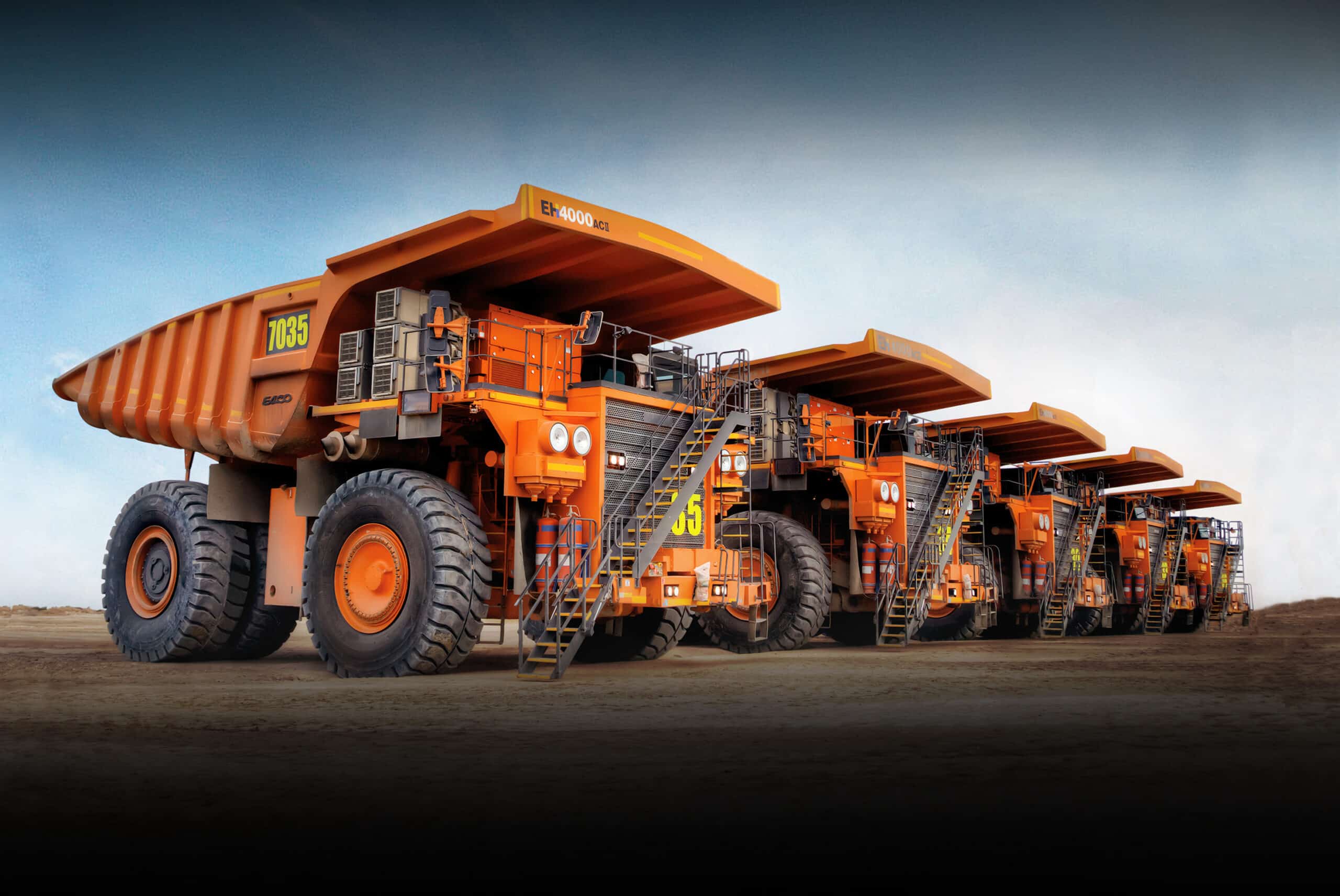
Automatic Lubrication Monitoring: Why 35 of 40 Haul Trucks Were Under-Greased
Most mine sites assume their auto lube systems are working as long as the pump is running. Fleet data tells a different story. When a Tier 1 Australian coal operation started using automatic lubrication monitoring on its haul trucks, it found that 35 of its 40 monitored trucks were consistently under-greased. The maintenance team had no way of knowing.
This article explains what automatic lubrication monitoring is and why pump status isn’t proof of grease delivery. It also covers what mines are finding once they can see where grease is actually going.
What is automatic lubrication monitoring?
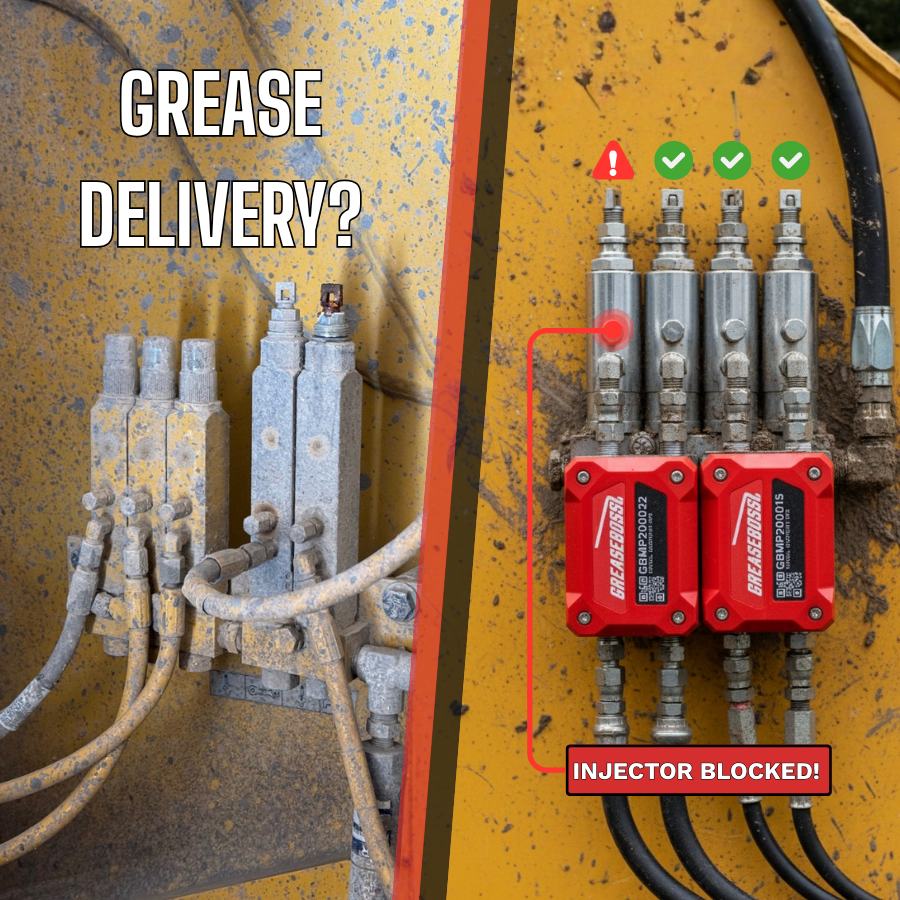
Automatic lubrication monitoring uses digital sensors to confirm that grease is being delivered to each critical point on a machine, rather than assuming it is. GreaseBoss sensors retrofit onto existing autolube systems on heavy mobile equipment (HME) and fixed plant. They measure grease flow and send the data to GreaseBoss Cloud in near real-time.
When grease delivery at a point drops out of specification, the system alerts the maintenance team. That gives them time to act before an under-greased bearing or pin becomes a component failure. Because the alert points to the actual root cause, the team fixes the lubrication fault instead of replacing damaged parts after the event.
For mining operations, that means:
- fewer unplanned stoppages
- less maintenance downtime
- lower total cost of ownership (TCO) on critical assets
- more production hours from the same fleet
Why a running grease pump doesn’t mean grease is reaching the point
An auto lube system can look healthy at the pump while individual points are starved. Common faults include:
- Bypassing injectors that cycle but don’t deliver the right volume
- Leaking or ripped hoses that dump grease before it reaches the bearing
- Faulty dump valves that stop pressure building in the line
Any of these can go unnoticed for weeks. Visual checks rarely catch them, and pump-level alarms won’t either, because the pump is doing its job. The failure only shows up when the bearing or pin does.
Watch our full discussion here.
What fleet-wide monitoring revealed at a Tier 1 coal mine
The Tier 1 coal operation started with an A-frame monitoring installation on two CAT 793 haul trucks to build a business case. The results were clear enough that, within six months, the customer committed to GreaseBoss monitoring across all its sites.
What the data showed:
- 35 of 40 monitored trucks were consistently under-greased, with no visibility for the maintenance team
- 8 A-frame bearing failures prevented on a single site, with under-greasing detected within hours, early enough for work orders to be raised before any damage
- No grease-related failures recorded on any haul truck at that mine since installation
- 75 trucks now installed, with a verified 60-day ROI payback period and more sites included in the next phase
The visibility gap wasn’t one or two problem trucks. It was most of the fleet.
How Endpoints verify grease delivery at critical points
GreaseBoss Critical Point Monitoring for HME uses wireless, battery-powered Endpoints installed downstream of critical injectors. Each Endpoint measures the grease that actually flows to that point, so every grease event is verified where it matters, not inferred from the pump.
This is the main difference between lubrication monitoring and a standard auto lube controller. The controller tells you the system tried to grease. The Endpoint tells you whether grease arrived.
Excavator bucket pins: a $40 hose or a two-week repair
Hydraulic mining excavators show how much this matters. They run under extreme loads and constant impact from rock, and the bucket pins take the heaviest forces on the machine.
Those pins also sit at the far end of the grease line, furthest from the pump. That’s where hoses get ripped off and injectors get smashed, often on the side of the bucket the operator can’t see.
One damaged hose can leave a bucket pin dry, and it can seize within hours. Repairing a seized pin can mean line boring and around two weeks of downtime. That parks a $30 million machine and can cost up to $10 million in lost production while the trucks it loads sit idle.
With Endpoints on the bucket pins and other critical points, the maintenance team gets an alert as soon as grease delivery falls out of specification. They can stand the machine down and replace a $40 hose in a couple of hours, rather than facing a seized pin and a two-week repair.
Fixed plant carries the same lubrication risk
The same problem applies beyond the mobile fleet. Coal, gold and iron ore operations run some of Australia’s largest HME fleets, and their processing plants carry exactly the same lubrication risk. Coal handling and preparation plants (CHPPs), SAG mills and ball mills all depend on critical bearings getting grease.
A mill bearing that isn’t receiving grease can stop production for days. On large sites, that can mean more than $50 million in lost production. Monitoring critical fixed plant points uses the same principle as HME: verify delivery at the point, and alert before the bearing fails.
How Australian mines are moving to fleet-scale grease monitoring
Fleet-wide grease compliance monitoring is now being adopted by maintenance and reliability teams across Australian mining. GreaseBoss systems protect HME and critical fixed plant at more than half of the mines in the Hunter Valley region. Several Australian mining companies have moved from initial installations to fleet-scale deployments.
Demand is also growing among mining companies in North America, South America and Africa. The lesson is the same in every region: auto lube systems are assumed to be working rather than verified. Each time that assumption is wrong, it can end in a critical equipment failure.
Key takeaways
- A running grease pump doesn’t confirm grease is reaching each bearing or pin.
- Injector, hose and dump valve faults can starve critical points for weeks without being noticed.
- Monitoring downstream of the injector verifies delivery at the point of lubrication.
- At one Tier 1 coal mine, 35 of 40 trucks were under-greased, and grease-related haul truck failures have stopped since monitoring began.
- The same risk, and the same fix, applies to fixed plant such as mills and CHPPs.
Want to know how many of your trucks are getting the grease they need? Talk to the GreaseBoss team about Critical Point Monitoring for your fleet.