
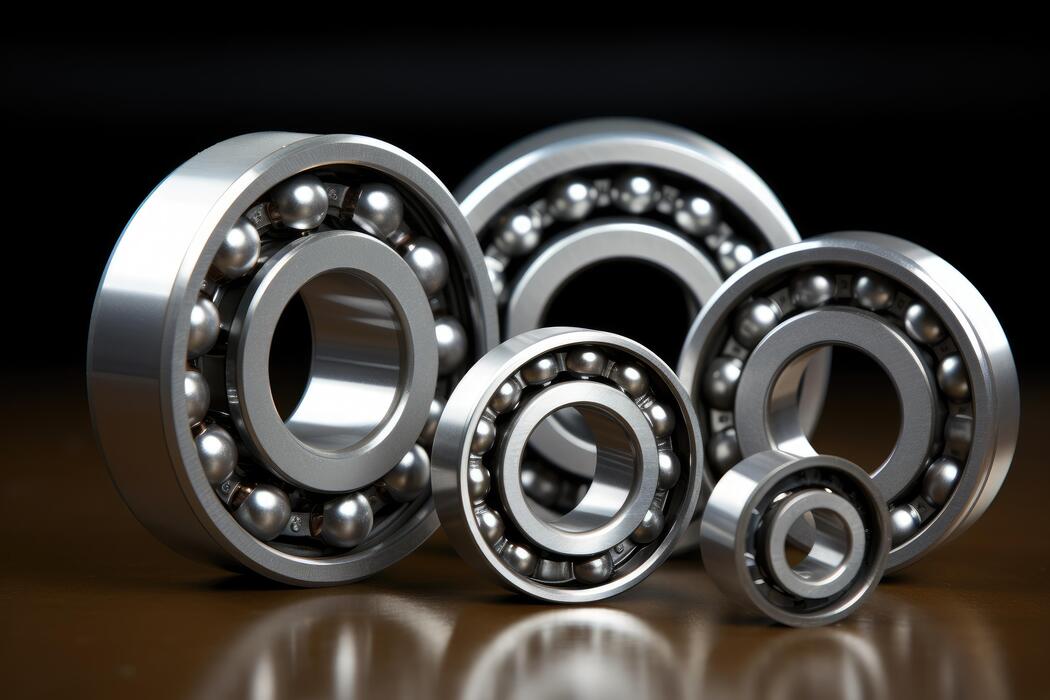
If you are asking how much grease does a bearing need, the honest answer is: enough to create a stable lubricating film, but not so much that the bearing has to churn through excess grease. Correct grease quantity depends on bearing size, speed, type, housing design, seals, temperature, contamination, and whether you are doing an initial fill or relubrication. The goal is not to “pack it full”; the goal is controlled lubrication that prevents wear, heat, and premature bearing failure.
How much grease does a bearing need?
A bearing usually needs only a portion of its available free space filled with grease. For many rolling-element bearings, an initial fill around 30% to 40% of the bearing’s free volume is a practical starting point, while some high-speed or angular contact applications may need less. Dirty, wet, or harsh environments may justify more grease because the lubricant also helps purge contaminants, but that does not mean the housing should be completely stuffed.
The simplest way to think about grease for bearings is this: grease is a delivery system for oil. The thickener holds oil in place, then releases it gradually into the contact zone. When there is too little grease, the bearing may not maintain a protective film. When there is too much, the rolling elements plow through grease, creating heat, drag, and pressure.

The difference between initial fill and relubrication
Initial fill and relubrication are often confused, but they are not the same task. Initial fill is the amount of bearing grease placed into a new or cleaned bearing and housing before operation. Relubrication is the smaller replenishment amount added later to replace grease that has aged, leaked, oxidized, been displaced, or carried contamination away.
For initial fill, many maintenance teams aim to fill the bearing itself and leave open space in the housing so grease can move and expand. Filling every cavity may feel safe, but it can cause the bearing to run hot once speed and temperature increase. Grease expands as it warms, and if there is nowhere for it to go, pressure can build around seals and shields.
For relubrication, the amount is usually much smaller. A common metric formula for replenishment is:
Gp = 0.005 × D × B
Where:
- Gp is the replenishment quantity in grams
- D is the bearing outside diameter in millimeters
- B is the bearing width in millimeters
Another commonly used field formula for ounces is:
Grease quantity ≈ 0.114 × D × B
Where:
- D is the bearing outside diameter in inches
- B is the bearing width in inches
These formulas are starting points, not permission to ignore the actual machine. Speed, temperature, load, seals, bearing style, and operating environment can all move the right amount up or down.
Why over-greasing causes damage
Over-greasing is one of the most common mistakes in greasing bearings because it feels preventative. If a little grease is good, more seems better. In reality, excess grease can make the bearing work harder than it should.
When rolling elements churn through too much grease, friction increases. That friction creates heat, and heat can thin the base oil, accelerate oxidation, harden the thickener, and shorten lubricant life. Once the grease changes consistency, it may stop flowing properly to the contact zone.
Too much grease can also damage seals. As grease warms and expands, pressure may force seals outward or push grease past them. Once seals are compromised, contamination can enter and fresh grease may escape, creating the exact failure path the extra grease was supposed to prevent.
Common signs of over-greasing include:
- A temperature rise soon after lubrication
- Grease forced out around seals or relief paths
- Increased motor load or power draw
- Bearing noise that gets worse after greasing
- Softened, aerated, or churned grease around the housing
- Repeated seal leakage after maintenance
If a bearing consistently heats up after lubrication, do not automatically add more grease. The problem may be excess grease, incompatible lubricant, blocked relief ports, incorrect interval, or a housing design that does not let old grease escape.
What happens when a bearing does not get enough grease?
Under-greasing allows metal surfaces to operate without an adequate lubricant film. That can lead to wear, surface distress, rising temperature, vibration, and eventually premature bearing failure. In severe cases, the bearing can progress from mild noise to rapid damage because the contact surfaces no longer have enough separation.
A bearing with too little grease may run dry in the loaded zone while old or hardened grease remains elsewhere in the housing. This is why simply seeing grease near the outside of a bearing does not prove the contact surfaces are protected. Grease must be in the right condition and able to reach the working areas.
Warning signs of under-greasing include:
- Dry, shiny, or discolored rolling elements
- Rising vibration or squealing noise
- Heat that develops gradually over time
- Rust or corrosion in humid environments
- Grease that appears hardened, caked, or separated
- Failure patterns that repeat between lubrication cycles
Under-greasing is especially risky in equipment that runs hot, operates continuously, handles shock loads, or is exposed to water and dust. In those cases, lubrication planning needs to consider both quantity and interval.
Practical ways to estimate grease quantity
Formulas are useful, but maintenance happens in the real world. Bearings are installed in housings, grease guns vary, and not every technician has a scale nearby. A lubrication excellence mindset combines calculation with simple field controls.
Use a bearing-size formula
Start with a recognized formula based on bearing dimensions. For many applications, using outside diameter and width gives a better estimate than guessing by feel. Record the calculated amount in the maintenance plan so each technician follows the same target.
Calibrate the grease gun
A grease gun does not always deliver the same amount per stroke. One gun may deliver 1 gram per pump, another may deliver 3 grams or more. To calibrate it, pump ten full strokes onto a clean scale, weigh the grease, then divide by ten.
For example, if ten strokes produce 25 grams, each stroke delivers about 2.5 grams. If the bearing needs 10 grams, the technician should apply four full strokes, not “a few pumps.” This simple step removes a surprising amount of guesswork.
Use the shaft-diameter rule carefully
A field rule of thumb is one grease gun stroke per inch of shaft diameter, assuming the gun is calibrated and delivers a known amount per stroke. Another rough estimate is shaft diameter times bearing width, divided by 10, to approximate ounces. These shortcuts can help when documentation is missing, but they should not override the bearing manufacturer’s instructions.
Watch for purge and pressure
If the housing has a relief port, remove the plug before greasing and allow old grease to purge. Add grease slowly while the bearing is running if the equipment design and safety procedures allow it. Stop when the calculated amount has been applied, or when clean grease begins to purge and the bearing condition remains stable.
Never keep pumping just because grease has not appeared immediately. A blocked path, hardened grease, or sealed bearing design may prevent purge and create pressure instead.
Grease quantity depends on bearing type and operating conditions
Different bearings do not all want the same fill. A slow, heavily loaded bearing in a dirty environment may need more frequent replenishment than a high-speed electric motor bearing in a clean, controlled setting. The correct quantity depends on how the bearing uses grease and how quickly that grease is consumed or displaced.
As general starting points:
- Deep groove ball bearings often work well with a moderate fill, commonly around 25% to 35% of free space.
- Angular contact ball bearings may need a lighter fill, especially at higher speeds, because excess grease can raise temperature quickly.
- Spherical roller bearings may need careful relubrication planning because load, misalignment, and housing space can vary widely.
- Slow-speed, harsh-environment bearings may need more grease to help block or purge contaminants.
- High-speed bearings usually require more restraint because churning heat becomes a bigger risk.
Environment matters too. Dust, washdown, moisture, vibration, and heat all influence the amount and interval. A bearing in a clean indoor fan does not face the same lubrication challenge as a conveyor bearing exposed to grit and water.

The grease itself changes the answer
Not all grease behaves the same way. Base oil viscosity, thickener type, consistency, additive package, and compatibility all affect how well the lubricant moves, stays in place, and releases oil. Choosing the wrong grease can make the “right” quantity perform badly.
A softer grease may flow more readily but may also purge faster in some housings. A stiffer grease may stay in place but may not feed the rolling elements well in colder conditions or at certain speeds. A grease with base oil viscosity that is too low may not protect loaded contacts, while one that is too high may increase drag.
Compatibility also matters. Mixing incompatible greases can cause softening, hardening, oil separation, or poor lubrication. If changing products, clean out old grease where practical or follow a controlled changeover procedure. The quantity calculation is only useful if the lubricant itself is suitable for the application.
A simple bearing greasing process
Use this practical workflow when documentation is limited or when you are trying to standardize maintenance:
- Identify the bearing and housing. Confirm bearing type, dimensions, seals, operating speed, temperature, load, and environment.
- Check the equipment guidance. Manufacturer recommendations should take priority over general formulas.
- Calculate a starting quantity. Use bearing dimensions to estimate initial fill or replenishment amount.
- Calibrate the grease gun. Convert grams or ounces into actual strokes for the tool being used.
- Clean the fitting and area. Prevent dirt from being pushed directly into the bearing.
- Open relief paths where applicable. Let old grease escape instead of pressurizing the housing.
- Apply grease slowly. Give the grease time to move through the passage.
- Monitor temperature and sound. A sudden change can signal too much grease, contamination, or a blocked path.
- Record what was done. Note grease type, amount, date, and observations so intervals can be improved.
This process makes lubrication repeatable. Instead of relying on habit, the team can adjust based on evidence: temperature trends, vibration readings, grease condition, and actual bearing life.
Better lubrication is controlled, not excessive
The best answer to “how much grease does a bearing need” is rarely “more.” It is the right amount, applied at the right interval, with the right bearing grease, through a clean and consistent method. Too little grease risks wear and heat; too much grease creates churning, pressure, seal damage, and wasted lubricant.
If you are building a better lubrication program, start by calculating quantities, calibrating every grease gun, and documenting each application. Those small controls turn routine greasing into a practical lubrication excellence habit—and they can make the difference between reliable equipment and avoidable bearing failure.