
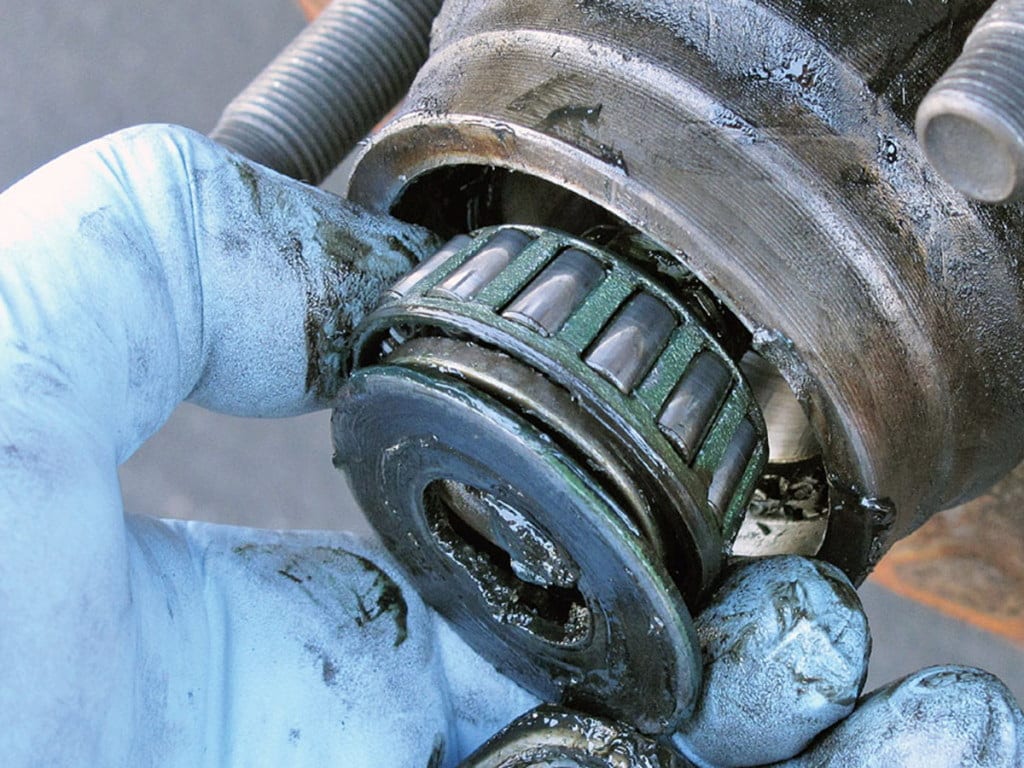
Too much bearing grease can be just as damaging as too little. Over-greasing creates heat, pressure, drag, and contamination risks that shorten bearing life and make equipment harder to run reliably. This guide explains the practical warning signs, why the damage happens, and the bearing maintenance tips that help teams move from guesswork to lubrication excellence.
What are the signs your bearings are over-greased?
The clearest signs your bearings are over-greased are excess grease around the bearing, rising operating temperature, unusual noise, damaged seals, and resistance when adding more grease. These symptoms often appear together: a bearing runs hotter, grease begins to purge or collect around the housing, and the equipment may sound or feel different under load.
Over-greasing is common because grease does not drain away like oil. It stays in the cavity, and every extra pump adds volume and pressure. If there is no clean relief path, that grease has to go somewhere, which is when seals, shields, and fittings can become stressed.

Visible grease where it should not be
One of the easiest clues is grease oozing from seals, fittings, relief ports, or the edge of a bearing housing. A small purge may be expected during proper relubrication on some equipment, but thick rings of grease, dripping buildup, or repeated mess after every lubrication round suggests the cavity is already too full.
Look for grease that has become dark, crusty, or packed around the bearing area. This buildup can trap dirt and moisture, turning what should be a protective lubricant into a contamination source. In tight spaces, hardened grease can also block relief paths and make the next lubrication attempt even more damaging.
Higher operating temperature
A bearing packed with too much grease has to churn through the excess. That churning increases friction and drag, which raises temperature. Heat then accelerates grease breakdown, causing oil bleed, thickener damage, and reduced protective performance.
Temperature changes are especially useful when compared with the equipment’s normal baseline. If a bearing begins running hotter shortly after lubrication, over-greasing should be on the troubleshooting list. Do not rely on touch alone; an infrared thermometer or temperature sensor gives a safer and more consistent reading.
Abnormal noise or vibration
Bearings need a lubricant film, not a packed cavity that creates resistance. Excess grease can make a bearing sound louder, rougher, or more labored as rolling elements push through the surplus lubricant. In some cases, the sound may change soon after fresh grease is added.
Noise alone does not prove over-greasing, because contamination, misalignment, looseness, and wear can also cause vibration. However, if the noise appears after lubrication and is paired with heat or grease purging, the pattern is meaningful. Ultrasound tools are useful here because they can help detect lubrication-related friction before the problem becomes obvious to the ear.
Seal damage and grease leakage
A grease gun can generate very high pressure, sometimes far more than a bearing seal is designed to tolerate. When grease is pumped into an already full cavity, the pressure may push past seals or deform them. Once a seal is damaged, the bearing is more vulnerable to dirt, water, and contamination.
This is one of the most expensive problems with grease lubrication because it creates issues down the line. The bearing may not fail from excess grease alone; it may fail later because the damaged seal allows abrasive contaminants inside.
Back pressure when greasing
If the grease gun handle suddenly feels harder to move, do not force it. Back pressure can mean the cavity is full, the fitting is blocked, the relief port is clogged, or the grease path is restricted. Continuing to pump may rupture a seal or force grease into areas where it does not belong.
A good practice is to pause, inspect the fitting and relief path, and confirm the correct amount before continuing. “One more pump” is not harmless if the bearing already has enough lubricant.
Why does too much bearing grease cause damage?
Too much bearing grease causes damage because it turns lubrication into resistance. Instead of reducing friction, the excess grease creates churning, heat, pressure, and buildup, all of which can reduce bearing performance and service life.
A properly lubricated bearing has enough grease to maintain a protective film and support normal operation. When the cavity is overfilled, the rolling elements must continuously push through surplus grease. That takes energy, increases temperature, and potentially dilutes the grease quality.
Churning creates heat and energy loss
Inside a moving bearing, grease is not just sitting still. The rotating elements move through it, and too much volume creates mechanical drag. That drag wastes energy and can make motors, fans, conveyors, pumps, and other equipment work harder than necessary.
The practical result is not only a bearing problem. Over-greasing can contribute to higher energy use, more heat in the machine, and additional maintenance cleanup. Lubrication excellence is partly about reliability, but it is also about using the right amount of material at the right time.
Heat breaks down the lubricant
Grease is made of base oil, thickener, and additives. When heat rises, the balance can change. The oil may bleed out too quickly, the thickener can degrade, and the remaining grease may become less effective at protecting the bearing surfaces.
This is why over-greasing can look confusing in the field. A bearing may be surrounded by grease but still be poorly lubricated where it matters. Quantity does not guarantee protection if the grease has overheated or contaminated.
Pressure can damage seals and shields
Excess pressure is a direct mechanical risk. If grease cannot escape through a clean relief port, it may push against seals or shields. Once those barriers are compromised, contamination can enter and lubricant can leave.
This is a common chain reaction: excess grease creates pressure, which damages the seal. The damaged seal allows contamination, which accelerates wear. By the time the bearing becomes noisy or hot, the original over-greasing event may be only one part of the failure.
Common situations that lead to over-greasing
Over-greasing often comes from good intentions. Technicians want to protect equipment, prevent dry bearings, and avoid downtime. Without clear amounts, intervals, or feedback, lubrication becomes a routine task based on habit rather than condition.
Common causes include:
- Greasing by calendar only: A fixed schedule may ignore speed, load, temperature, duty cycle, and environment.
- Using “pumps” as a measurement: Grease guns deliver different amounts per stroke, so three pumps from one gun may not equal three pumps from another.
- Blocked relief ports: If old grease cannot escape, new grease increases pressure inside the housing.
- Poor fitting condition: Dirty or damaged fittings can restrict flow and encourage technicians to apply more force.
- No baseline data: Without normal temperature, vibration, or ultrasound readings, it is harder to know when lubrication is actually needed.
- Mixing greases without confirmation: Incompatible products can thicken, soften, or separate, creating symptoms that resemble other bearing problems.

How can you confirm over-greasing before it becomes a failure?
You can confirm likely over-greasing by combining visual inspection, temperature checks, lubrication history, and condition monitoring. No single clue is perfect, but a pattern of heat, excess grease, recent lubrication, and seal stress gives you a strong reason to act.
Start with simple observations. Check whether the bearing began running hotter after the last lubrication round. Look for fresh grease pushed out around seals or relief ports. Review how much grease was added and whether the amount was based on a calculation or a habit.
For small teams without advanced tools, a basic inspection routine can still catch problems early:
- Record the normal condition. Note typical temperature, sound, and visible grease condition when the equipment is running well.
- Inspect before adding grease. Look for leakage, buildup, blocked relief ports, and damaged seals.
- Add grease slowly. Stop if you feel unusual resistance or see excessive purging.
- Recheck after operation. Monitor temperature and noise after the equipment has run long enough to stabilize.
- Document the amount used. Track grease type, quantity, date, and observations so patterns become visible.
Where available, ultrasound, vibration, and temperature monitoring can make lubrication more precise. Ultrasound can indicate friction changes during greasing, vibration can flag developing mechanical issues, and temperature trends can show whether a bearing is responding normally. Together, these tools help prevent both under-lubrication and over-lubrication.
Practical steps to fix an over-greased bearing
If you suspect a bearing has been over-greased, avoid adding more lubricant until you understand the condition. More grease may temporarily quiet a symptom, but it can also increase pressure and heat. The goal is to relieve excess, restore proper flow, and prevent repeat damage.
Use these steps as a practical starting point:
- Stop and assess safely. Follow your site’s lockout and safety procedures before inspecting equipment closely.
- Check for obvious seal damage. If seals are displaced, torn, or leaking, the bearing may need more than just a correction.
- Clean external buildup. Remove excess grease around the housing so new leakage or purging is easier to spot.
- Open or clear relief paths if designed for the equipment. A blocked relief port can trap pressure and old grease.
- Run the equipment as appropriate. Some systems may purge extra grease during operation, but only do this according to the equipment design and safety requirements.
- Monitor heat and sound. If temperature or noise does not improve, inspect for contamination, wear, misalignment, or internal damage.
- Update the lubrication record. Note what happened so the next maintenance round does not repeat the same mistake.
If the bearing continues to run hot or noisy after being purged, treat it as a reliability issue. Over-greasing may have damaged the seal, degraded the lubricant, or masked another fault.
Better bearing maintenance tips for preventing repeat problems
Prevention starts with replacing “more is safer” with “the right amount is safer.” Bearings need the correct grease, in the correct quantity, at the correct interval, applied with the correct method. That sounds simple, but it requires discipline.
A commonly used grease quantity formula is:
G = 0.114 × D × B
In this formula, G is the grease amount in ounces, D is the bearing outside diameter in inches, and B is the bearing width in inches. This gives teams a starting point that is more reliable than counting random pumps. Always confirm the correct method for the specific equipment, bearing type, and operating condition.
A stronger lubrication program should include:
- Grease gun calibration: Know how much grease each gun delivers per stroke.
- Clean fittings and nozzles: Prevent dirt from being pushed into the bearing.
- Correct grease selection: Use the specified bearing grease and avoid unverified mixing.
- Controlled application: Add grease slowly and stop when the target quantity or condition feedback says to stop.
- Relief port maintenance: Keep purge paths clean where the design includes them.
- Condition-based intervals: Adjust lubrication frequency for speed, load, temperature, moisture, dust, and duty cycle.
- Training and labeling: Make the correct grease type, amount, and interval easy to identify at the point of work.
The best bearing maintenance tips are not complicated, but they must be repeatable. A clear procedure helps every technician make the same good decision instead of relying on feel, memory, or assumptions.
A simple over-greasing checklist
Use this checklist when a bearing shows signs of lubrication trouble:
- Is there grease oozing from seals, shields, fittings, or relief ports?
- Did the bearing temperature rise after the last lubrication task?
- Has the sound changed from smooth to rough, strained, or louder?
- Is the grease gun harder to pump than usual?
- Are relief ports blocked by hardened grease or debris?
- Is old grease dark, crusty, separated, or contaminated?
- Was the amount added measured, or was it based on a fixed number of pumps?
- Has the grease gun output been calibrated?
- Are the correct grease type and relubrication interval clearly documented?
- Do vibration, ultrasound, or temperature readings support the decision to grease?
If several answers point in the same direction, pause the lubrication routine and investigate. Catching over-greasing early is far cheaper than replacing bearings after heat, pressure, and contamination have done their work.
The takeaway
Over-greased bearings often announce themselves through heat, noise, pressure, and seal damage. The fix is not simply to clean up the excess; it is to improve the process that allowed too much grease to be added in the first place.
Good lubrication practices protect equipment, reduce waste, and support more reliable operation. Measure the amount, keep fittings and relief paths clean, monitor condition, and train technicians to stop when the bearing has what it needs. That is how routine greasing becomes true lubrication excellence.