
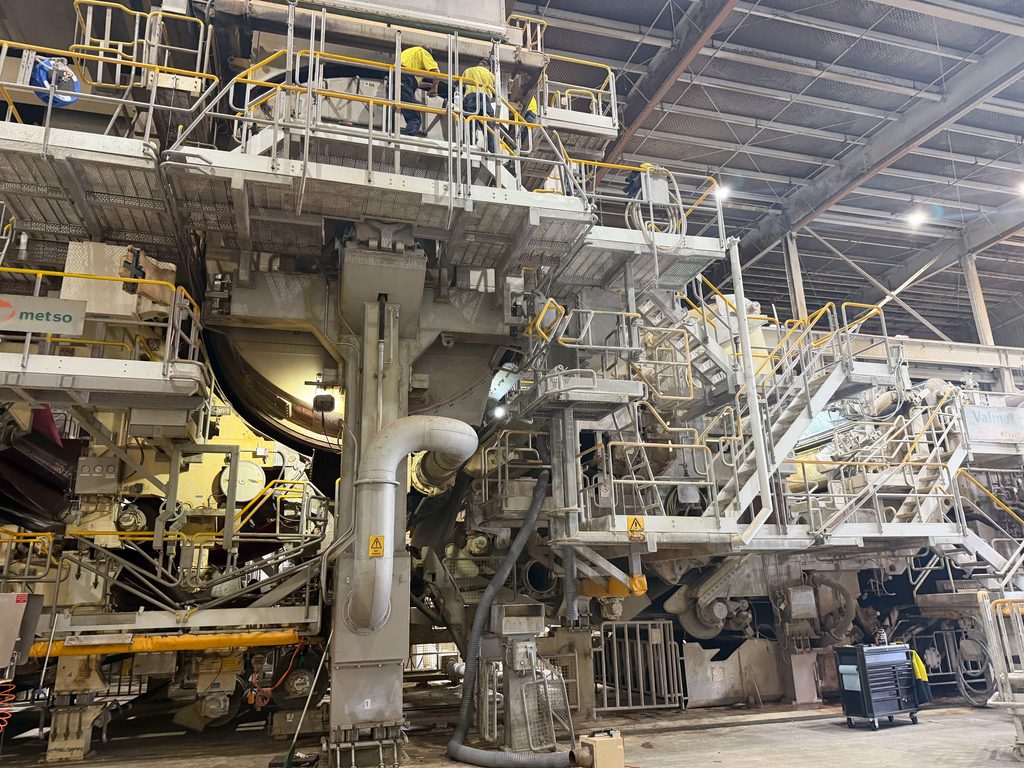
A single bearing failure on a crusher or conveyor can halt a production line for days. The repair bill is only the start. Lost output, emergency labour, and expedited parts compound quickly into six-figure losses that no maintenance budget anticipates.
Across mining, quarrying, and heavy manufacturing, preventive maintenance in manufacturing is the discipline that stands between planned production and unplanned catastrophe. This article covers what preventive maintenance means in an industrial context, why lubrication sits at its core, and how verified grease data gives your reliability team the visibility to act before failures escalate.
Key Takeaways: Preventive Maintenance in Manufacturing
- Preventive maintenance replaces reactive repairs with scheduled tasks that reduce unplanned downtime and extend equipment life.
- Lubrication is the single most impactful activity within any preventive maintenance program for rotating and articulating equipment.
- Common lubrication failures include blocked injectors, blown hoses, empty grease tanks, and mistuned pump timers.
- GreaseBoss provides verified grease delivery data that converts assumed lubrication compliance into measurable, actionable insights.
- Comparing planned versus actual grease volumes lets maintenance supervisors identify faults before they cause bearing or pin failures.
What Is Preventive Maintenance in Manufacturing?
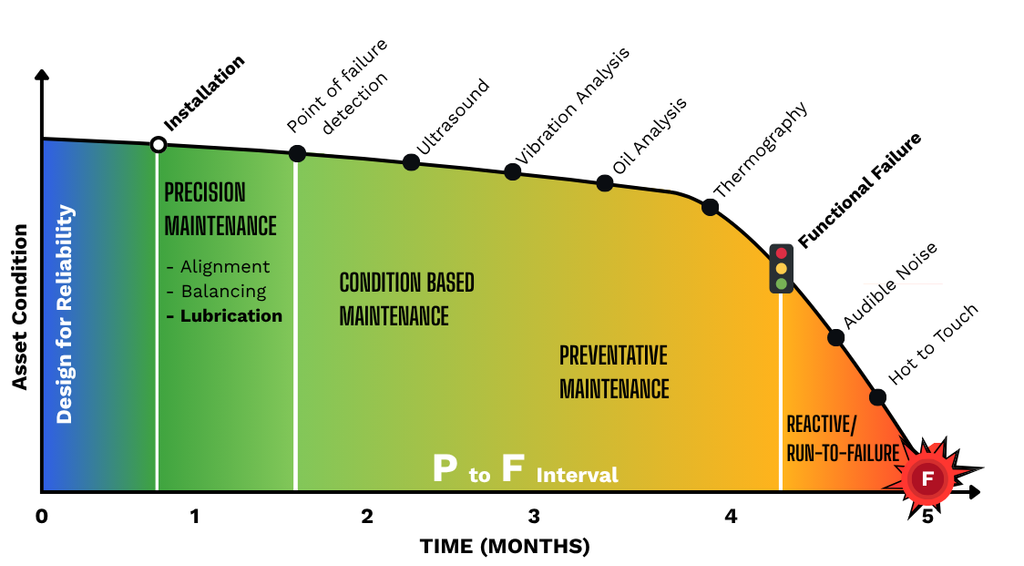
Preventive maintenance is a scheduled approach to equipment care that addresses wear, contamination, and fatigue before they cause breakdowns. Tasks are performed at fixed time intervals, usage thresholds, or condition triggers rather than after a failure occurs.
In a manufacturing environment, preventive maintenance covers lubrication, filter changes, belt inspections, alignment checks, and component replacements. The goal is straightforward: keep machines running within their design parameters so production targets are met consistently.
According to a NIST study on manufacturing maintenance economics, U.S. discrete manufacturers spent $57.3 billion on machinery maintenance in 2016, while preventable maintenance losses amounted to $119.1 billion. Those numbers make a clear case: spending on prevention is far cheaper than paying for failure.
Why Does Preventive Maintenance Matter for Equipment Reliability?
Equipment reliability measures how consistently a machine performs its intended function under stated conditions. Every unplanned stoppage erodes reliability metrics, disrupts production schedules, and increases total cost of ownership.
Preventive maintenance directly supports reliability by catching degradation early. Scheduled bearing inspections, for instance, surface wear patterns that indicate lubrication gaps or alignment drift. Catching those patterns at a planned shutdown costs hours. Missing them costs days and often an entire component replacement.
For maintenance supervisors at mining and heavy industrial operations, reliability is not abstract. It translates into tonnes moved per shift, equipment availability percentages, and safety incident rates. A disciplined preventive maintenance program protects all three.
How Does Lubrication Fit into Preventive Maintenance Programs?
Lubrication is the most impactful activity in any preventive maintenance program. According to Shell PLC, 70% of mechanical failures are due to incorrect lubrication. That single statistic explains why grease management deserves more attention than a line item on a work order.
Correct lubrication requires three conditions met simultaneously: the right grease, in the right amount, at the right time. Miss any one of those conditions and the bearing, pin, or bushing operates outside its design envelope. Over-greasing forces seals and attracts contaminants. Under-greasing accelerates metal-on-metal contact and heat buildup.
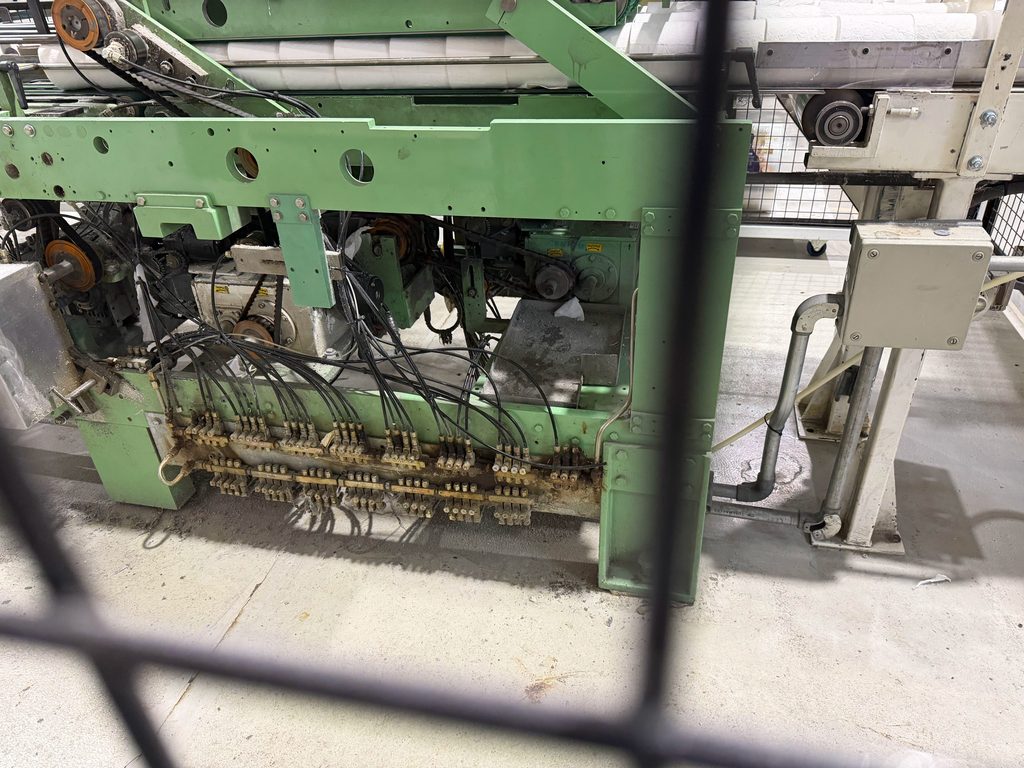
The challenge is that traditional lubrication management has been assumed rather than measured. Paper-based route sheets cannot confirm that grease actually reached a critical bearing. Automatic lubrication systems can mask faults because pump pressure does not confirm grease delivery at the point. A pump may reach operating pressure even when an injector is blocked, a hose is blown downstream, or a grease tank is empty.
What Are the Most Common Lubrication Failures in Industrial Equipment?
Understanding specific failure modes helps your team build targeted inspection routines. Vague references to “equipment issues” waste time. Named faults drive focused corrective action.
Common lubrication failure modes in manufacturing environments include:
- Blocked injectors that prevent grease from reaching the bearing
- Bypassing injectors that dump grease back into the return line
- Blown hoses downstream of the injector bank
- Venting issues that cause pressure buildup without delivery
- Incorrect pump timer settings that under-deliver or over-deliver grease
- Empty grease tanks that go undetected on remote assets
- Air pockets that interrupt consistent lubricant flow
- Contamination from dirt, water, or incompatible lubricants entering the system
Each of these faults can progress silently to a catastrophic failure if not detected. A minor grease repair measured in hours becomes a full bearing or A-Frame replacement measured in days and tens of thousands of dollars.
How Does Lubrication Data Improve Preventive Maintenance?
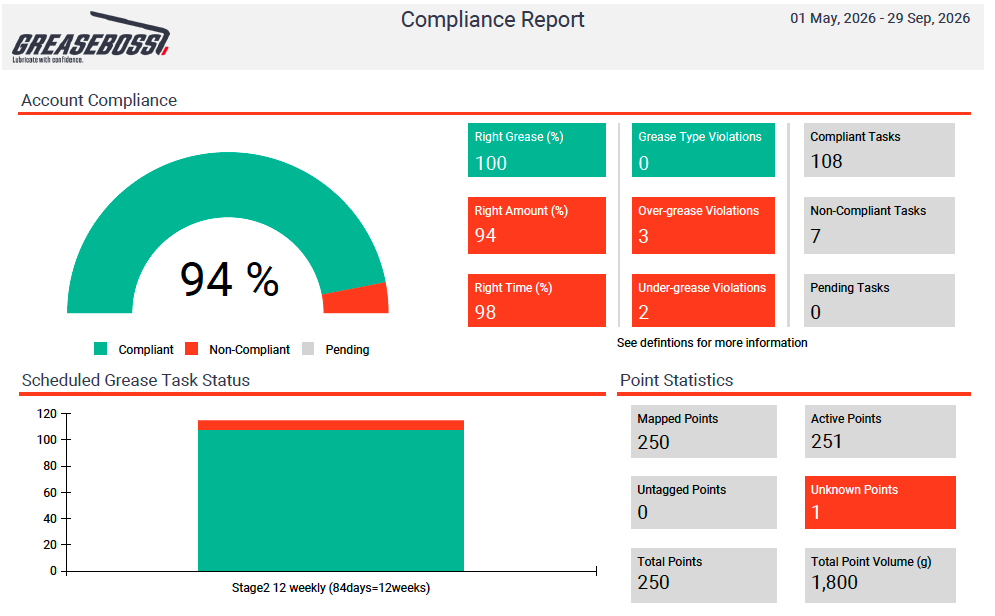
Lubrication data closes the visibility gap between what should be delivered and what actually is. When your maintenance team can compare planned versus actual grease volumes for every monitored point, the conversation shifts from assumption to evidence.
GreaseBoss delivers this visibility through Critical Point Monitoring. Endpoint flow meters installed downstream of injectors and distributors record the exact volume of grease passing through each pump cycle. That data syncs to GreaseBoss Cloud, where automatic alerts notify your team when delivery falls outside specification.
This approach converts lubrication from a trust-based process into a data-verified one. Maintenance supervisors see which assets are receiving correct grease volumes, which are trending toward under-lubrication, and which have active faults that need immediate attention.
What Is the Difference Between Preventive and Predictive Maintenance?
Preventive maintenance follows a fixed schedule. Tasks are performed at set intervals regardless of the observed condition of the equipment. It is effective at reducing failures but can result in over-maintenance on healthy assets or under-maintenance on assets that degrade faster than the schedule anticipates.
Predictive maintenance uses real-time condition data, such as vibration, temperature, or fluid analysis, to trigger tasks only when indicators suggest an approaching fault. It is more precise but depends on sensors, analytics infrastructure, and skilled interpretation.
Prescriptive maintenance takes this a step further. GreaseBoss provides prescriptive capabilities by not only detecting a lubrication fault but also identifying the specific failure mode and recommending the corrective action. When your system detects a bypassing injector on a conveyor bearing, the maintenance team receives an alert that specifies the asset, the grease point, and the deviation from the planned lubrication schedule. That is actionable data, not just a warning.
How Can Maintenance Teams Build a Stronger Preventive Maintenance Program?
A preventive maintenance program only delivers value when it is executed consistently and verified. These principles help strengthen your approach:
- Map every grease point on every critical asset. Assign grease type, volume, and frequency based on OEM specifications.
- Replace paper-based tracking with digital verification. Digital records close the gap between work orders issued and work actually completed.
- Monitor automatic lubrication systems at the point of delivery, not just at the pump. Pump pressure does not confirm the machine is greased.
- Review planned versus actual reports regularly. Identify patterns that indicate systemic faults across a fleet or production line.
- Use fleet-level data to prioritise which assets need monitoring first. A single asset validates the technology. A fleet captures the value.
GreaseBoss supports each of these steps with fixed plant and heavy mobile equipment solutions that cover both manual and automatic greasing. The system provides actionable lubrication insights within one day of installation, giving your team rapid return on investment.
In Conclusion: Preventive Maintenance Starts with Verified Lubrication
Preventive maintenance in manufacturing keeps your equipment running, your production on schedule, and your maintenance costs under control. At the centre of every effective program is lubrication, the one activity that protects bearings, pins, and bushings from the silent failures that cause the most expensive downtime.
The gap in most programs is visibility. GreaseBoss closes that gap by verifying that every grease point receives the right grease, in the right amount, at the right time. When your data confirms what your schedule promises, your reliability team moves from reactive firefighting to confident, planned maintenance.
FAQs About Preventive Maintenance in Manufacturing
What is the main goal of preventive maintenance in manufacturing?
The main goal is to reduce unplanned equipment downtime by performing scheduled maintenance tasks before failures occur. This keeps production running consistently and extends the operating life of critical assets.
How does lubrication affect equipment reliability in industrial plants?
Correct lubrication reduces friction, dissipates heat, and prevents contaminant ingress at bearing surfaces. When lubrication is missed or incorrect, bearings and pins wear prematurely, leading to unplanned stoppages. GreaseBoss verifies grease delivery at every monitored point, giving your reliability team confirmed data instead of assumptions.
What is the difference between planned and actual greasing?
Planned greasing is the volume and schedule specified by OEM design or site engineering standards. Actual greasing is the verified volume delivered to the grease point. GreaseBoss compares planned versus actual volumes automatically, alerting your team when delivery deviates from specification.
Can preventive maintenance reduce bearing failures caused by lubrication issues?
It can when paired with verified grease delivery data. Scheduled greasing alone does not confirm the bearing received the correct volume. GreaseBoss monitors grease flow at the point of delivery, detecting blocked injectors and empty tanks before they cause bearing damage.
How quickly can GreaseBoss provide lubrication insights after installation?
GreaseBoss provides actionable lubrication insights within one day of installation. Endpoint sensors begin recording grease flow data immediately, syncing to GreaseBoss Cloud where your team can view reports and receive automatic alerts.