
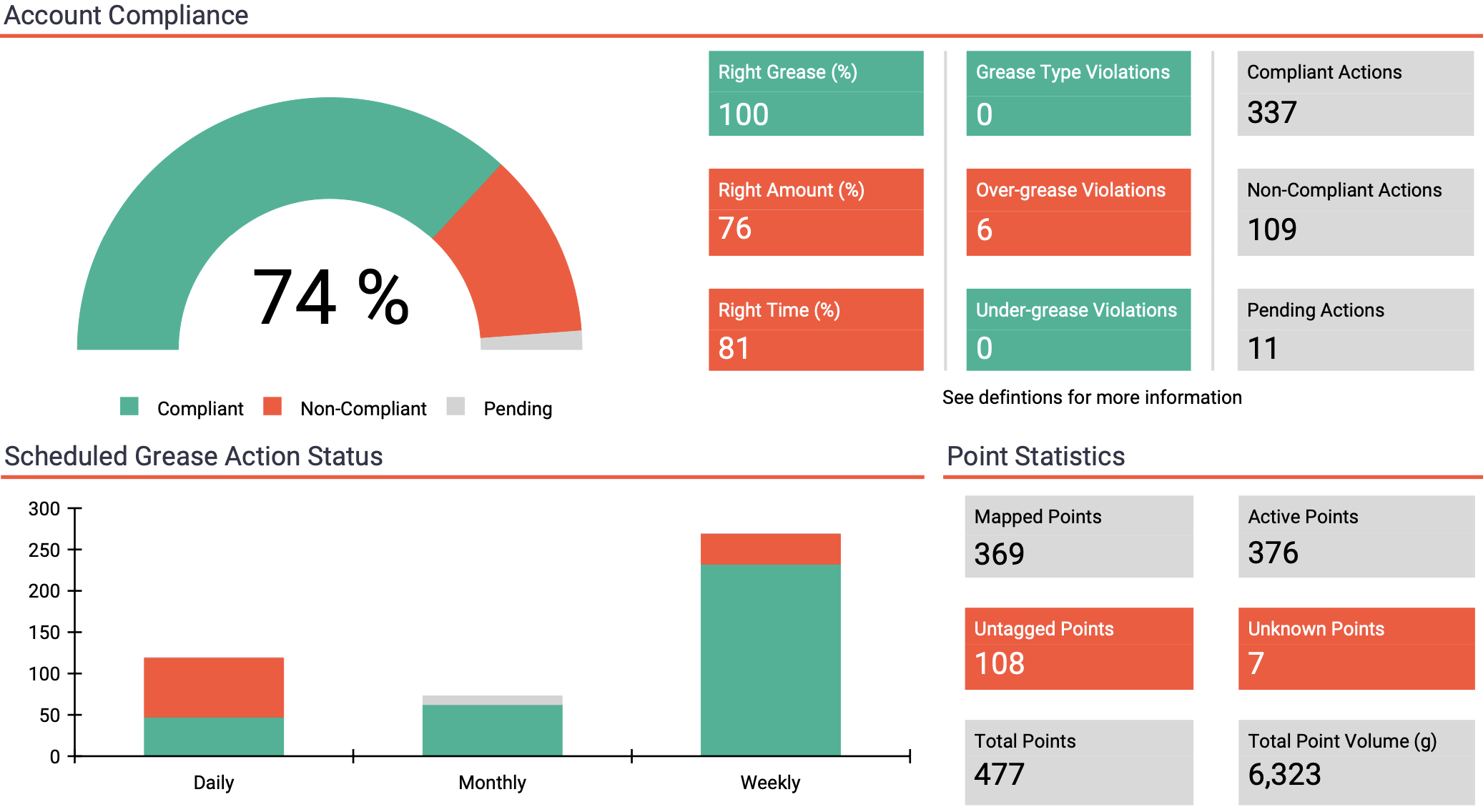
PM compliance: why a closed work order is not a verified outcome
PM compliance tracks whether scheduled preventive maintenance gets completed on time; it does not, by itself, demonstrate that equipment is ready to perform. A closed work order should lead to evidence of the condition found, the work performed, and the result verified—not replace that evidence. For maintenance leaders, the practical challenge is to connect schedule execution with equipment condition and production performance. (getmaintainx.com)
What does PM compliance actually tell you?
PM compliance tells you how consistently your team completes preventive maintenance within its defined schedule. Treat it as a measure of execution discipline, not a certificate of equipment health. To interpret it properly, establish what counts as completed work, which due dates apply, and how exceptions are recorded. (getmaintainx.com)
For your reporting, use an explicit calculation:
PM compliance = scheduled PM tasks completed within the agreed window ÷ total PM tasks due in that window × 100.
Document the rules alongside the number. Specify whether the window follows calendar time, operating hours, or another approved trigger. Keep canceled, deferred, and partially completed tasks visible rather than silently changing the denominator.
Most importantly, separate three questions:
- Was it on time? Compare actual completion with the approved due window.
- Was the work complete? Check required steps, readings, and documented exceptions.
- Was the result acceptable? Compare the resulting condition or function with defined acceptance criteria.
Use these as separate checks. Combining them into a single green indicator makes it harder to see whether the next action belongs with planning, execution, or technical review.
A closed status is a record, not the result
A work order status describes where a job sits in the administrative workflow. Verification describes what evidence supports the outcome. NIST’s maintenance workflow explicitly includes recording the asset’s as-found and as-left condition, reviewing that information, and storing it in the maintenance system. (tsapps.nist.gov)
Consider a hypothetical conveyor inspection. A technician completes the inspection and records an abnormal condition that requires a replacement part. The inspection may be complete, but the corrective work remains outstanding.
In that situation, closing the inspection is not necessarily wrong. Closing it without a linked corrective request, a priority decision, and a clear handover is the gap to prevent. Keep the inspection result distinct from the disposition of the defect.
Use precise status descriptions where your system permits them: work performed, verification pending, verified, or follow-up required. Do not force technicians to choose between leaving completed inspection work open indefinitely and implying that an unresolved condition has disappeared.

What evidence makes a maintenance outcome verified?
A verified maintenance outcome has documented evidence that the task met its defined acceptance criteria under appropriate conditions. The evidence should show what was checked, how it was checked, and whether the result passed. ENERGY STAR recommends tracking actual equipment performance against expected performance and defining methods for addressing deficiencies. (energystar.gov)
Build that evidence into the job plan before the task reaches the technician. Otherwise, the person performing the work must decide what “good” means at the point of completion.
Define acceptance before execution
Replace vague instructions such as “check condition” with asset-specific criteria drawn from approved technical information. The Department of Energy identifies manufacturer recommendations, process requirements, and knowledgeable personnel as sources for operating and maintenance criteria. Do not invent universal limits for different machines or operating contexts. (www1.eere.energy.gov)
For each relevant task, specify:
- The condition to assess: Identify the component, inspection point, or required function.
- The method: State the approved inspection, measurement, or functional check.
- The acceptance criteria: Reference the applicable limit, condition description, or procedure.
- The operating context: Record the load, speed, temperature, or other conditions needed to interpret the result.
- The response to failure: Explain how to escalate the finding and initiate corrective work.
Capture enough detail to support a decision
Ask for the evidence needed to judge the result, not an attachment for every checkbox. Record measurements with units, explain exceptions, and use photographs when they clarify a visible condition. Where a functional test is required, capture the result rather than merely recording that the test occurred.
Scale review to the task’s consequence. Propose independent review for higher-risk work, while allowing simpler checks for lower-risk tasks under approved procedures. Make responsibility for acceptance explicit so “someone reviewed it” never becomes the final record.
Connect PM findings to maintenance backlog management
Inspection findings need a route into prioritized corrective work. NIST describes reviewing new notifications alongside existing backlog and scheduled PM work through a risk-based prioritization process. PNNL likewise recommends aligning maintenance priorities with equipment criticality, mission impact, and safety consequences. (tsapps.nist.gov)
Make maintenance backlog management part of the closeout workflow. For each unresolved finding, require a linked work request, a responsible owner, and a documented priority. Record constraints such as unavailable parts or production access separately from the technical finding.
At the backlog review, distinguish among work that is:
- Ready to schedule: Scope, resources, and access requirements are understood.
- Waiting for planning: The finding needs diagnosis or a clearer work package.
- Blocked: A named constraint prevents execution, with an owner assigned to resolve it.
- Deferred by decision: The rationale, approval, and review date remain visible.
Do not use the backlog count alone to judge progress. Review the age and consequence of unresolved maintenance issues, particularly findings on production-critical assets. Ask which defects remain exposed—not simply how many orders disappeared from the list.
How does verified PM support efforts to improve OEE?
Verified PM supports efforts to improve overall equipment effectiveness by helping teams connect maintenance actions with specific production losses. OEE combines availability, performance, and quality; breakdowns affect availability, while small stops and slow cycles affect performance. A compliance percentage alone does not describe those losses. (oee.com)
For teams asking how to improve OEE, start with the loss pattern rather than adding more PM tasks automatically. Select an asset associated with recurring unplanned line stoppages, then review its work history and inspection findings. Check whether the existing PM actually addresses the observed failure mode.
Use a focused review:
- Identify the loss. Separate unplanned downtime from speed loss, quality loss, and other production delays.
- Trace the maintenance history. Review completed tasks, exceptions, measurements, and unresolved findings.
- Test the connection. Determine whether the task can detect or prevent the relevant deterioration.
- Evaluate subsequent operation. Compare recurrence and production losses over an appropriate operating period, noting changes in product, load, and operating conditions.
Treat the comparison as evidence to investigate, not automatic proof of causation. If equipment failures continue after apparently successful PM, review task suitability, execution quality, intervals, and unresolved defects before blaming schedule adherence. NIST describes using condition reports and deterioration evidence to reassess maintenance strategies and inspection intervals. (tsapps.nist.gov)
Start with a focused closeout review
Begin with one production-critical asset or a recurring source of downtime. Review a manageable sample of recent PM records with a technician, planner, and operations representative. Use the exercise to find weaknesses in the process, not to score handwriting or punish candid reporting.
For each record, check whether a reviewer can establish:
- What condition was found and what work was performed.
- Which acceptance criteria applied and whether they were met.
- Whether the verification conditions were meaningful.
- What remained unresolved and where the follow-up sits.
- Who accepted the result or authorized the next decision.
Then fix the most consequential gap. Rewrite an ambiguous task, add a necessary measurement field, clarify the handover, or establish ownership of corrective findings. Avoid redesigning every work order before learning what the first review reveals.
For ongoing reporting, place PM compliance beside evidence completeness, unresolved critical findings, repeat failures, and relevant production losses. Define each measure consistently and review exceptions together. This follows the broader principle of choosing maintenance metrics that reflect the facility’s mission and critical systems, rather than relying on activity counts alone. (pnnl.gov)
Make completion mean something
Keep PM compliance, but give it a clear boundary: it measures execution against the schedule. Pair it with evidence of acceptable condition, traceable follow-up, and a review of subsequent performance. The goal is not more paperwork or fewer open orders; it is a maintenance process in which the record supports the decision to accept, investigate, or act.