
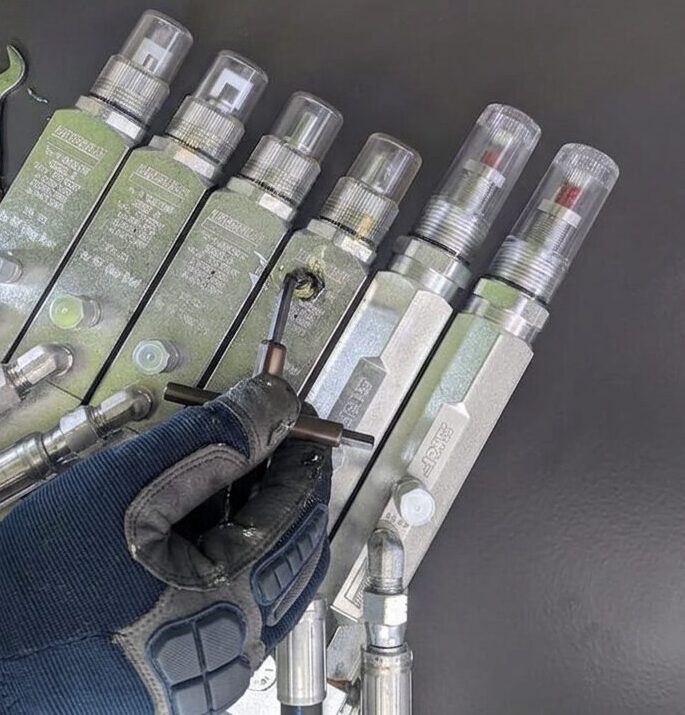
If a grease injector is not working, you might see clear signs. The indicator pin may not move, the grease might come out unevenly, or you could notice leaks around the injector body.
An auto lube pump might not build pressure for a few reasons. These can include an empty reservoir, damaged seals, worn parts, clogged suction paths, problems with the relief valve, air pockets, or lubricant that is too thick for the temperature.
An automatic lubrication system can make equipment care safer, cleaner, and more consistent, but it is not maintenance-free. When grease or oil stops reaching critical points, small faults can quickly escalate into unplanned downtime. This guide describes the usual issues with automatic lubrication systems, how to identify them early, and what routine maintenance should entail.
Why is grease not reaching the bearing?
Grease may fail to reach a bearing even when the auto lube system appears to be cycling because pressure, flow, lubricant condition, or delivery hardware has been compromised. The most common causes include blocked lines, a grease injector not working, air trapped in the system, incorrect lubricant viscosity, or an auto lube pump not building pressure.
Don’t assume the pump is the only issue. The problem might be at the reservoir, filter, injector, line, fitting, or lubrication point. A bearing that is not receiving lubricant may run hotter, become noisier, or show signs of accelerated wear.
Sometimes, points close together have too much grease, while the main problem area is dry. This usually shows that the grease is not spread out evenly. That pattern helps narrow the fault: the pump may be working, but a downstream injector, valve, or line may be blocked.
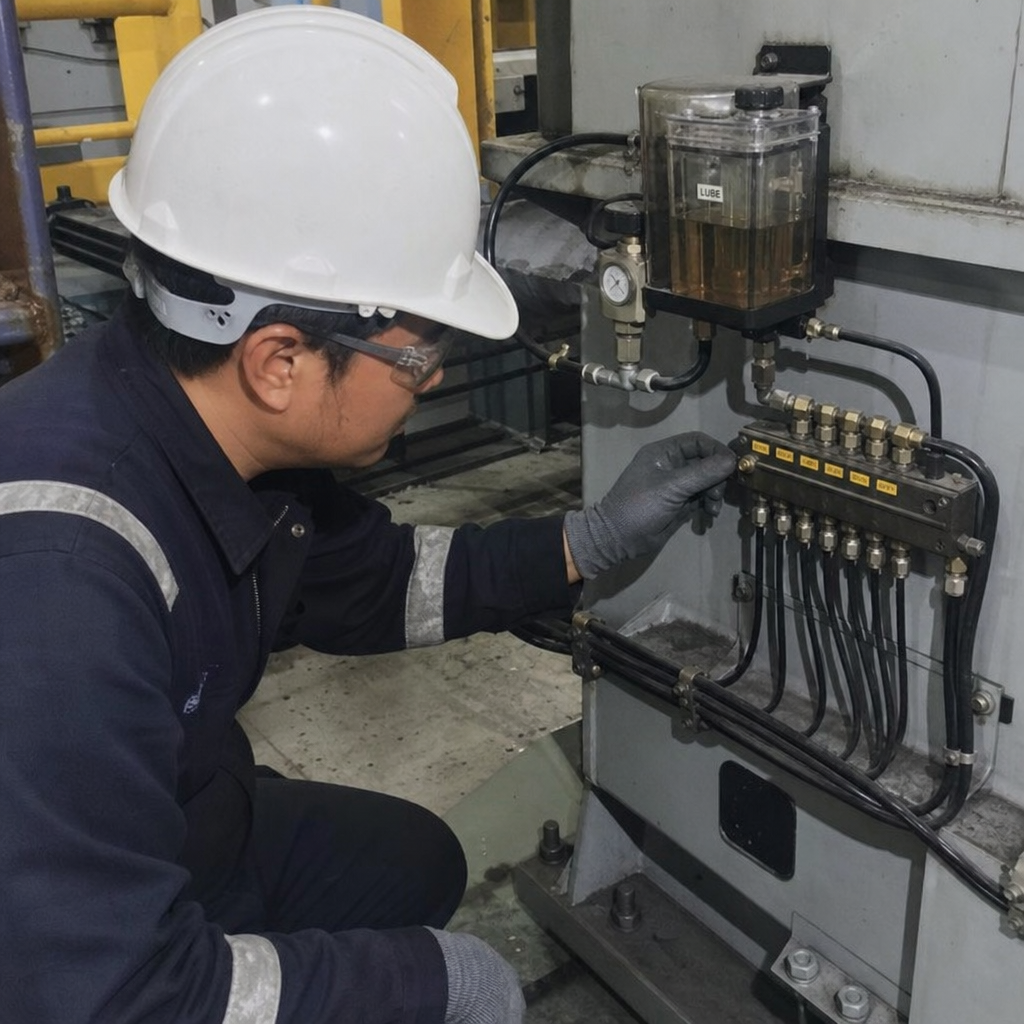
Signs that your auto lube system needs attention
Automatic systems are designed to reduce manual effort, not remove human inspection from the process. Operators and maintenance teams should treat changes in sound, temperature, residue, and pressure as early warnings. A quick visual and operational check can often catch a small lubrication issue before it becomes a bearing failure.
Common symptoms include:
- Dry lubrication points: A bearing, bushing, chain, or pin looks starved while the system is running normally.
- Excess grease around seals: Over-lubrication or blocked discharge paths may force grease where it should not go.
- Pressure fluctuations: Sudden spikes may suggest a blockage, while low or no pressure may point to pump, seal, reservoir, or air problems.
- Leaking fittings or damaged lines: Lubricant may be escaping before it reaches the intended point.
- Noisy or hot bearings: Friction increases when the lubricant film is insufficient or contaminated.
- Empty or contaminated reservoir: Dirt, water, wrong grease, or aged lubricant can disrupt system performance.
- Uneven delivery: Some points receive grease while others receive little or none.
These signs should be investigated together, not in isolation. For example, a hot bearing and low system pressure may indicate pump or supply issues, while a hot bearing and high pressure may suggest a blockage near that point.
Common causes of automatic lubrication system problems
Most lubrication failures come from a handful of practical issues: restriction, pressure loss, contamination, air, wear, or incorrect setup. Understanding the cause helps prevent repeat repairs.
Hardened grease and clogged lines
Grease can harden over time, especially when equipment sits idle or is exposed to temperature swings. Once grease stiffens inside a line or injector, the pump may cycle but struggle to move lubricant to the point of use. A clogged line can also create high back pressure, causing relief valves to open or grease to escape at weak fittings.
Contamination makes this worse. Dirt, metal particles, water, or incompatible lubricants can form deposits that restrict injectors and metering valves. If the system is refilled without proper cleanliness, contamination may enter the reservoir and circulate through the entire network.
Injector failure and metering issues
Injector failure is one of the most frustrating problems because the system may look active while one point receives no lubricant. Injectors can stick, wear, clog, or fail to reset between cycles. When that happens, the affected lubrication point may be dry even though other points continue receiving grease.
A grease injector not working may show visible signs such as no movement at an indicator pin, inconsistent discharge, or leakage around the injector body. However, some failures are less obvious and require pressure testing, inspection, or replacement to confirm. If the same point repeatedly runs dry, the injector and its downstream line should be checked before simply increasing pump output.
Pump pressure loss
An auto lube pump not building pressure can be caused by an empty reservoir, damaged seals, worn pump components, clogged suction paths, relief valve issues, air pockets, or lubricant that is too thick for the operating temperature. Low pressure means the system may not overcome line resistance, especially in long runs or cold environments.
Pressure loss can also come from leaks. Loose fittings, cracked hoses, damaged tubing, or failed connectors allow lubricant to escape before it reaches the injectors. If pressure builds briefly and then drops quickly, inspect for external leaks and internal bypassing.
Air trapped in the system
Air pockets can interrupt lubricant flow and cause inconsistent delivery. This may happen after the reservoir runs empty, during component replacement, or when refilling is done improperly. Air compresses under pressure, so the pump may cycle without moving a consistent volume of grease.
Bleeding the system is often necessary after repairs, lubricant changes, or reservoir runouts. If air keeps returning, look for suction-side leaks, poor reservoir filling practices, or pump inlet problems.
Wrong lubricant or environmental mismatch
Lubricant selection matters. Grease that is too thick may not flow through small lines or injectors, especially in cold conditions. Grease that is too soft may not stay where it is needed or may separate under heat. Oil systems face similar challenges when viscosity is not matched to the application.
Temperature, vibration, moisture, dust, and washdown conditions all affect performance. The right lubricant for manual greasing may not always be the right choice for an automatic system with narrow lines, metering valves, and long delivery distances.
How to troubleshoot lubrication delivery problems
Troubleshooting should move from simple, visible checks to more targeted component testing.
This stops the need to change parts that are not needed. It helps us see if the problem is across the whole system or just one lubrication point.
Use this practical sequence:
- Check the reservoir. Confirm the lubricant level, condition, and type. Look for separation, contamination, water, or the wrong grease.
- Inspect the pump cycle. Verify that the pump runs when commanded and that timers, controllers, or sensors are functioning.
- Read the pressure behavior. Low pressure suggests supply, pump, leak, or air issues. High pressure suggests restriction or blockage.
- Look for leaks. Inspect fittings, hoses, tubing, manifolds, injectors, and connections for fresh lubricant.
- Compare lubrication points. If all points are dry, start near the pump. If one point is dry, focus on that injector, line, or bearing port.
- Test or observe injectors. Check whether indicators move, reset, and discharge as expected.
- Bleed air from the system. Remove trapped air after runouts, repairs, or refills.
- Flush blocked lines when needed. If hardened grease or contamination is present, cleaning or line replacement may be required.
- Verify settings. Pump output, cycle frequency, pressure limits, and lubricant volume should match the equipment’s requirements.
- Confirm delivery at the bearing. Do not stop at pump pressure; verify that lubricant reaches the actual point.
This step-by-step approach is especially useful when diagnosing automatic lubrication system problems under time pressure. It separates pump faults from injector faults and helps avoid the common mistake of increasing lubrication frequency when the real issue is a blockage.
Automatic lubrication and manual lubrication each have trade-offs
An automatic lubrication system improves consistency by delivering small amounts of lubricant at planned intervals, often while equipment is operating. It can reduce technician exposure to moving machinery, ladders, guarded areas, and hard-to-reach points. It also helps avoid the “too much today, not enough next week” pattern that can happen with manual routes.
Manual lubrication still has advantages. A technician physically visiting each point may notice looseness, wear, heat, noise, damaged guards, or contamination that an automated system cannot judge on its own. Manual greasing may also be simpler for low-use equipment or machines with very few lubrication points.
The risk with automatic systems is the “set it and forget it” mindset. If a line clogs or an injector fails, the system may continue cycling while the bearing receives nothing. The best results come from combining automation with regular inspections, pressure checks, and delivery verification.
Single-point and multipoint systems fail in different ways
Not every auto lube system is built the same, so troubleshooting depends on the system type. Single-point lubricators are commonly used for individual bearings or small groups of points. They may be spring-driven, gas-driven, or motor-driven, and each style has its own possible failure modes.
A single-point unit may stop delivering because of a dead battery, depleted gas cell, blocked outlet, incorrect setting, empty cartridge, or lubricant that does not flow well in the environment. These devices are convenient, but they still need scheduled replacement and visual checks.
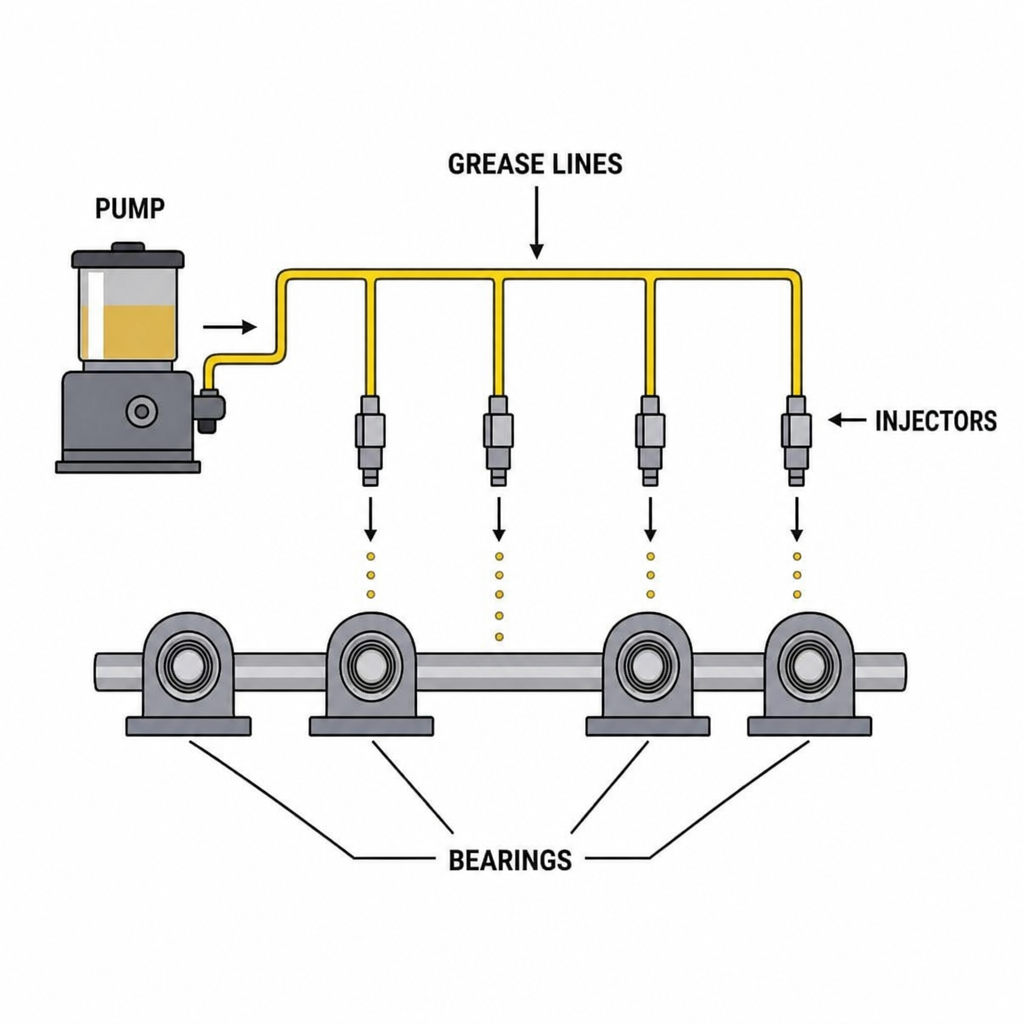
Multipoint systems feed several lubrication points from one pump. Parallel systems typically use injectors or metering devices to distribute lubricant to each point. Progressive systems move lubricant through a sequence of valves, and a jammed valve early in the sequence can stop flow to downstream points. That makes indicator monitoring and pressure alarms especially useful.
Maintenance habits that prevent repeat failures
Good lubrication system maintenance is less about heroic repairs and more about disciplined routines. The goal is to keep lubricant clean, pressure stable, injectors responsive, and delivery paths open.
Build these practices into regular maintenance:
- Use the specified lubricant. Confirm grade, thickener compatibility, viscosity, and temperature suitability before refilling.
- Keep refilling clean. Use clean tools, sealed containers, and proper fill points to prevent dirt and water from entering the reservoir.
- Inspect lines and fittings. Look for abrasion, crushing, vibration damage, loose connections, and leaks.
- Monitor pressure trends. A slow change over time can reveal restrictions, pump wear, or developing leaks.
- Exercise and observe injectors. Indicators, discharge patterns, and reset behavior can reveal early injector failure.
- Replace filters and seals as scheduled. These small parts protect expensive components and help maintain pressure.
- Bleed after service. Air introduced during refilling or repairs can cause inconsistent lubrication.
- Flush during lubricant changes. Avoid mixing incompatible greases or pushing degraded lubricant deeper into the system.
- Document problem points. A recurring dry bearing may signal a design, routing, or contamination issue rather than a one-time fault.
Preventive maintenance should also include basic housekeeping around the reservoir and pump. If the reservoir is dirty, not sealed well, or runs empty too often, the system will have problems, no matter how good the parts are.
Over-greasing can look like under-greasing
One of the trickier lubrication problems is that too much and too little grease can create similar symptoms: heat, friction, bearing stress, and premature wear. Under-greasing fails to maintain the lubricant film. Over-greasing can increase churning, raise operating temperature, damage seals, and attract contaminants.
This is why increasing pump frequency is not always the right fix. If grease is not reaching one bearing because of a blockage, increasing output may over-grease other points while the failed point remains dry. Instead, confirm actual delivery and adjust volume only after the system is clean, bled, and functioning correctly.
A practical inspection mindset
Automatic lubrication works best when it is treated as a controlled delivery system, not a hidden accessory.
Every inspection should answer three questions: Is the system making pressure? Is the lubricant moving through the parts? Is each lubrication point getting the right amount?
For quick field checks, focus on:
- Reservoir level and lubricant condition
- Pump operation and pressure response
- Leaks at fittings, hoses, and injectors
- Injector movement or discharge confirmation
- Dry, hot, noisy, or over-greased lubrication points
- Recent changes in lubricant, temperature, duty cycle, or maintenance work
If the answer is unclear, verify physically where possible. A pressure reading at the pump is useful, but it does not prove that grease reached the bearing.
The takeaway for reliable lubrication
Most automatic lubrication system problems are preventable when teams combine clean lubricant handling, correct settings, routine inspection, and fast troubleshooting. If you are asking why is grease not reaching the bearing, start with the basics: reservoir, pump pressure, leaks, air, injectors, lines, and the bearing port itself.
An auto lube system can reduce downtime, improve safety, and support longer equipment life, but only when it is maintained with the same seriousness as the machines it protects. Inspect it, document issues, and confirm delivery before small lubrication faults become expensive failures.