
No. GreaseBoss does not replace your automatic lubrication system, and we do not manufacture one. We do not make grease, grease guns, or auto-lube pumps. GreaseBoss Critical Point Monitoring is a monitoring layer that installs onto the system you already own and measures whether grease is actually reaching each critical point. Your pump, lines, injectors and lube schedule stay exactly as they are. What changes is that you stop assuming grease was delivered and start seeing it.
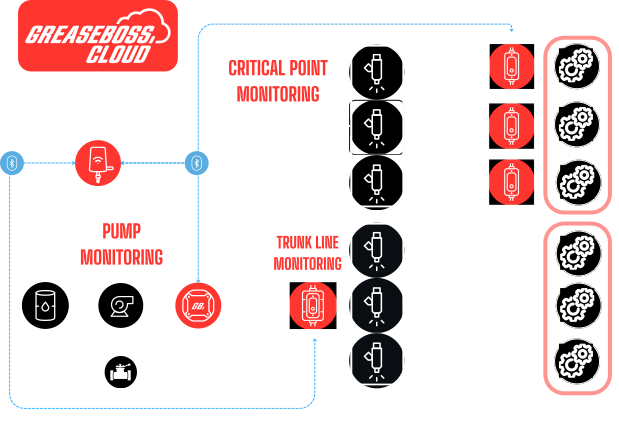
What your auto-lube system actually confirms
Your auto-lube system is very good at telling you it ran. It is not built to tell you what it delivered.
A cycle switch confirms the pump completed a cycle. A pressure switch confirms the line reached pressure. Neither confirms that grease left the injector and entered the bearing. Those are two different events, and the gap between them is where grease-related failures live.
That gap is why the question of how to tell if your auto lube system is working is so hard to answer from the cab or the control room. A blocked grease injector can sit in a fully pressurised line and deliver nothing, cycle after cycle, while every indicator you have reads normal. A blown hose can dump grease onto the ground while the pump reports a healthy cycle. An injector that has drifted out of tune delivers a fraction of its rated volume and never announces it.
The site finds out weeks later, when a bearing runs hot or a pin fails. By then the lubrication record shows a system that was working perfectly.
What GreaseBoss adds that your system cannot report
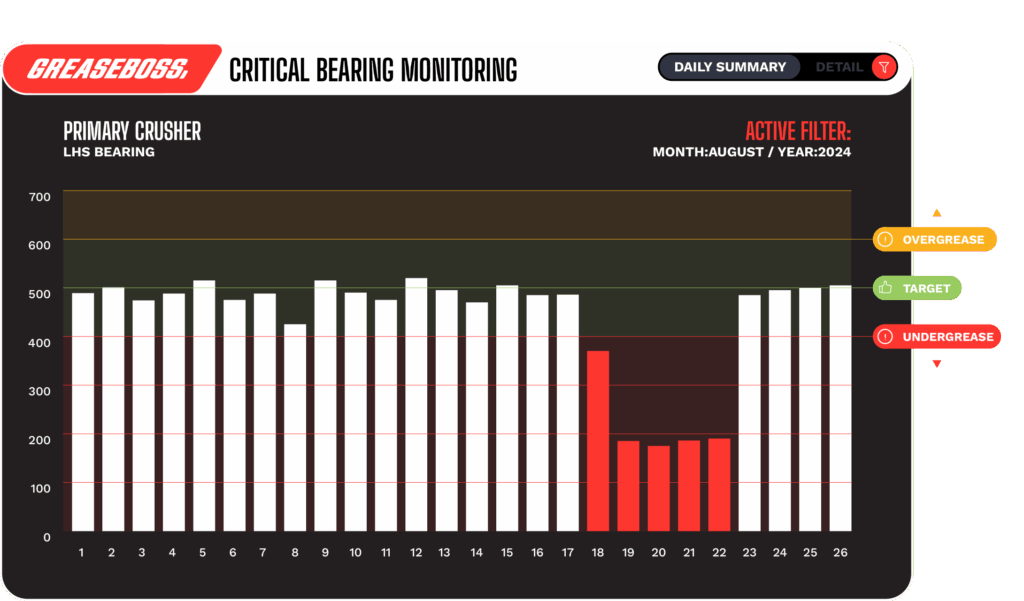
GreaseBoss Critical Point Monitoring measures grease flow at the point of lubrication.
A GreaseBoss Endpoint is a wireless, battery-powered industrial flow meter installed downstream of the injector. Every time the system pumps, the Endpoint records the exact volume of grease that passed through it and the time it was delivered. That reading is the one piece of information your auto lube system monitoring has never had: not that the system tried, but what arrived.
Endpoints sync to a nearby GreaseBoss Gateway over Bluetooth, typically every hour, and the Gateway backhauls to the GreaseBoss Cloud over 4G, site Wi-Fi, or your OT network. In the Cloud, every delivery is compared against the target volume for that point. When delivery falls outside specification, the system raises an alert without anyone requesting a report.
This is what makes planned vs actual greasing measurable rather than assumed. Your lubrication schedule states what each point should receive. The Endpoint records what it received. The difference between those two numbers, across every monitored point, is your real lubrication compliance. It is also the first dataset most sites have ever had that can support a root cause analysis or an OEM warranty claim on a grease-related failure.
GreaseBoss retrofits to the system you already own
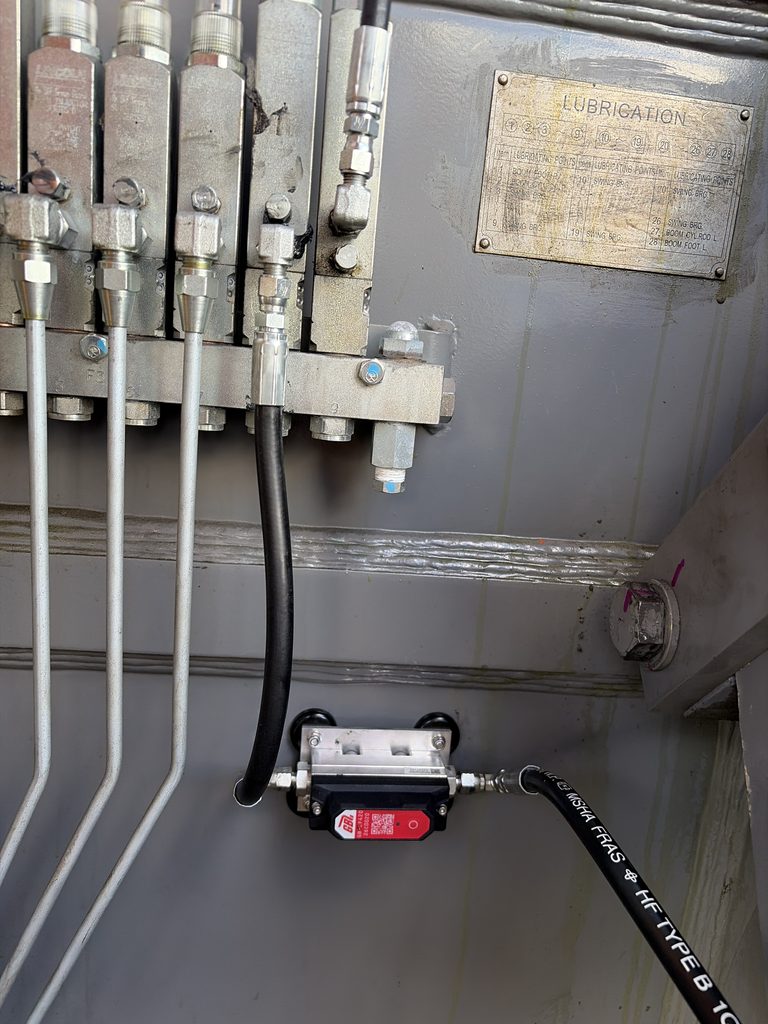
The most common objection we hear is that adding monitoring means touching a lubrication system that is finally running well. It does not.
Endpoints are installed inline, downstream of the injector, on the existing grease line. On mobile equipment they are typically mounted on brackets using high-strength magnets, which takes minutes per point to install. The Gateway goes in an existing electrical cabinet. Nothing about your pump, reservoir, line routing, injector settings or service interval changes.
The approach is deliberately brand agnostic, because a flow meter downstream of an injector does not care who built the injector. Coverage scales with what you need to protect. Endpoint Low Flow sits downstream of injectors and distributors, while Endpoint High Flow monitors trunk lines and high-viscosity systems such as open gear lube. Endpoint Bulk Flow sits at the pump to monitor pump performance and tank filling.
You can start with the eight points that keep failing and expand from there. You are not committing to a system replacement to find out whether grease flow monitoring tells you something you did not already know.
What this looks like on a real site
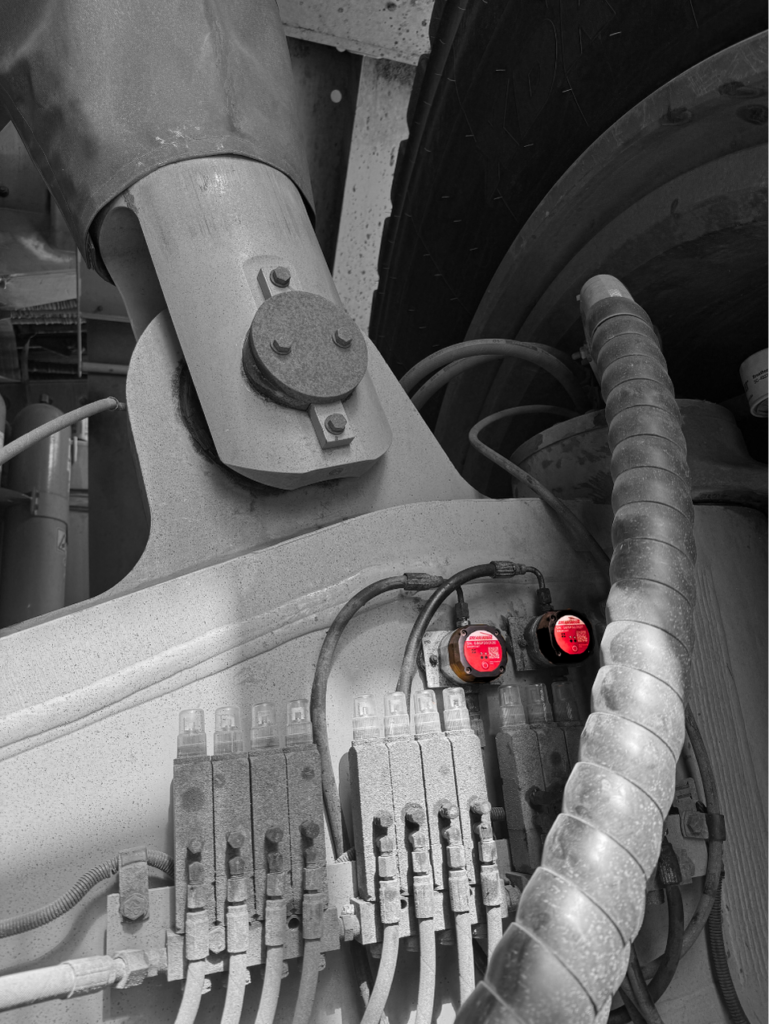
An Australian coal mine was losing CAT 796AC kingpins at roughly one a fortnight, at about $250,000 per failure. The maintenance team suspected grease but could not prove it. Two Endpoint Low Flow units were fitted to each kingpin, with a Gateway in the truck’s electrical cabinet.
The data showed severe under-greasing across every monitored injector. A follow-up injector audit confirmed that many injectors were mistuned. The system also alerted on two trucks that had lost lubrication across the entire system, which traced back to a fleet-wide automatic lubricator configuration issue and triggered a full fleet refit. Forecast saving from eliminating the failure mode was approximately $6 million a year.
None of the underlying faults were new. They had been running in plain sight on a lubrication system that reported itself as healthy.
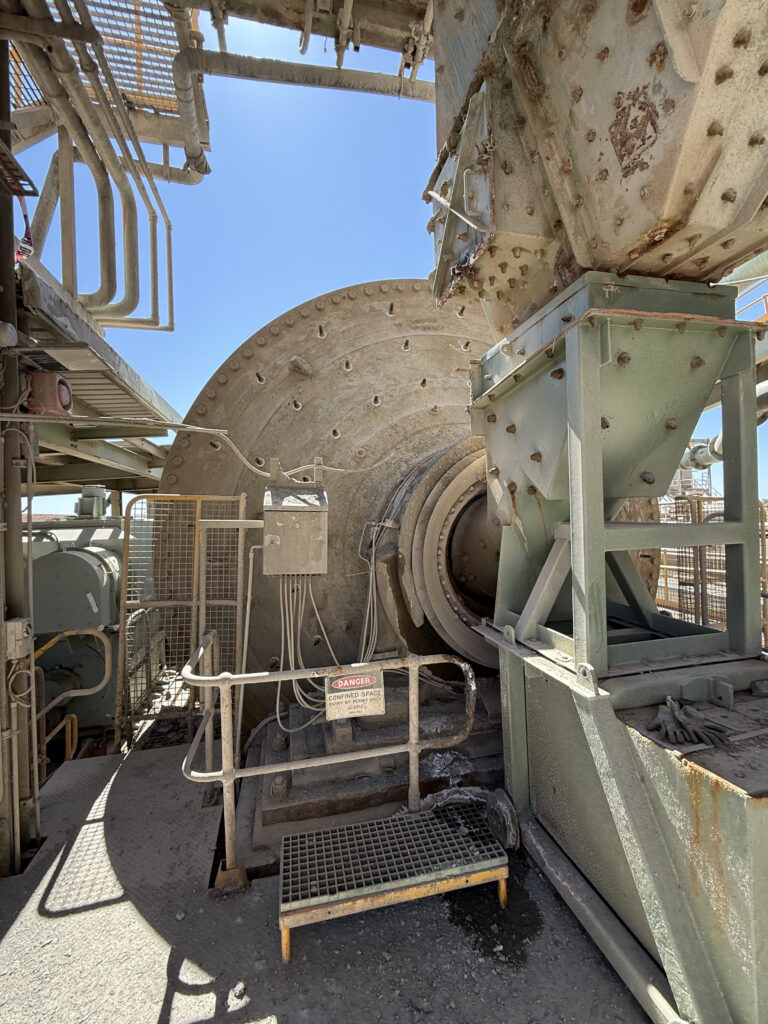
At a Tier 1 gold mine, sixteen Endpoints were installed across SAG mill trunnion and pinion points after a ball mill lubrication failure had already costed nine days of downtime and AU$25 million in lost production.
Within three months the data surfaced mistimed pumping, severe under-greasing at the feed end bearings, and a pinion injector failure. Each finding became a work order before it became an event.
When you do need to change your auto-lube system
Monitoring is not a repair.
If your pump is undersized for the number of points it feeds, the Endpoints will show you consistent shortfall across the whole circuit. However, If your injectors are at end of life, you will see delivery decaying point by point, and the fix is new injectors. If a line is the wrong specification for the grease and ambient temperature, you will see cold-start delivery failures, and the fix is the line.
What changes is that these become known, quantified, and prioritised faults with evidence attached, rather than suspicions competing for budget. Several sites have used the first three months of flow data to justify a lubrication system upgrade that had been declined twice before.
Does GreaseBoss replace manual greasing?
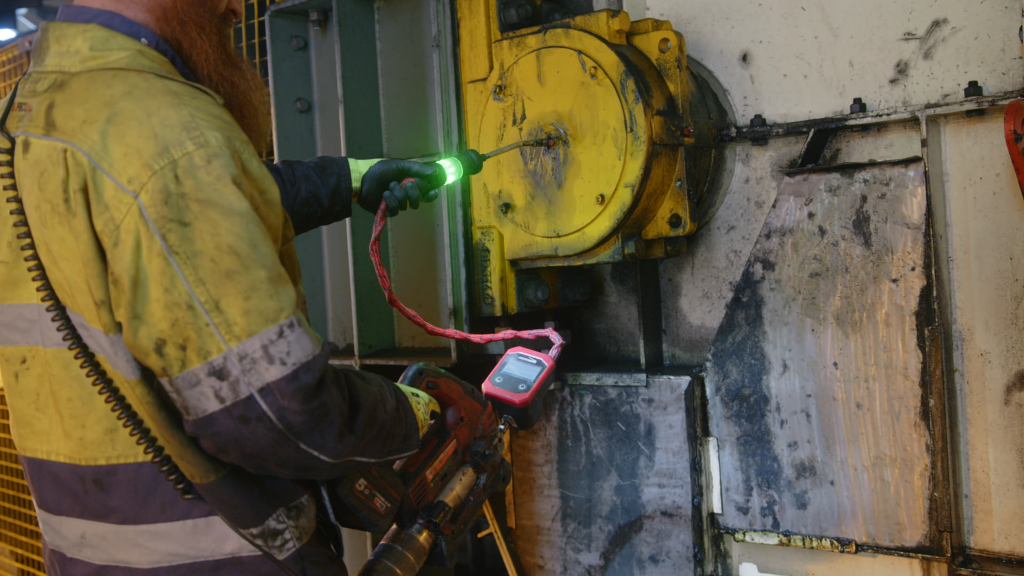
No, and for the same reason. Where points are greased by hand, our Manual Lubrication Management solution instruments the process rather than removing it. A GreaseBoss Head Unit replaces the hose on a standard grease gun, adding a flow meter, RFID reader and screen. RFID GreaseTags at each point confirm the technician is at the correct fitting, and the Head Unit measures and records the volume applied against the route downloaded from the Cloud.
The grease gun, the technician and the route all remain. The paper sign-off does not.
Frequently asked questions
Does GreaseBoss replace my auto-lube pump or injectors?
No. GreaseBoss installs downstream of your existing injectors and measures grease flow. No lubrication hardware is removed or substituted.
Can my SCADA system already tell me this?
Not reliably. SCADA reports pump state and line pressure, which confirm the system operated, not that grease reached the bearing. We cover the difference in detail in a separate article.
Will this work with my brand of auto-lube system?
Endpoints are installed inline on the grease line and are designed to work across manufacturers. Confirm your specific configuration with our team before ordering.
Is the data real time?
Near real time. Endpoints typically sync hourly via the Gateway, which is well inside the window needed to act on a lubrication fault.
How long does installation take?
Individual Endpoints are usually installed in minutes using magnetic brackets. Fleet and plant rollouts are scoped per site.